


The importance of sauce
Why a great sauce is the difference between a meal and a moment — and what every sauce needs to work
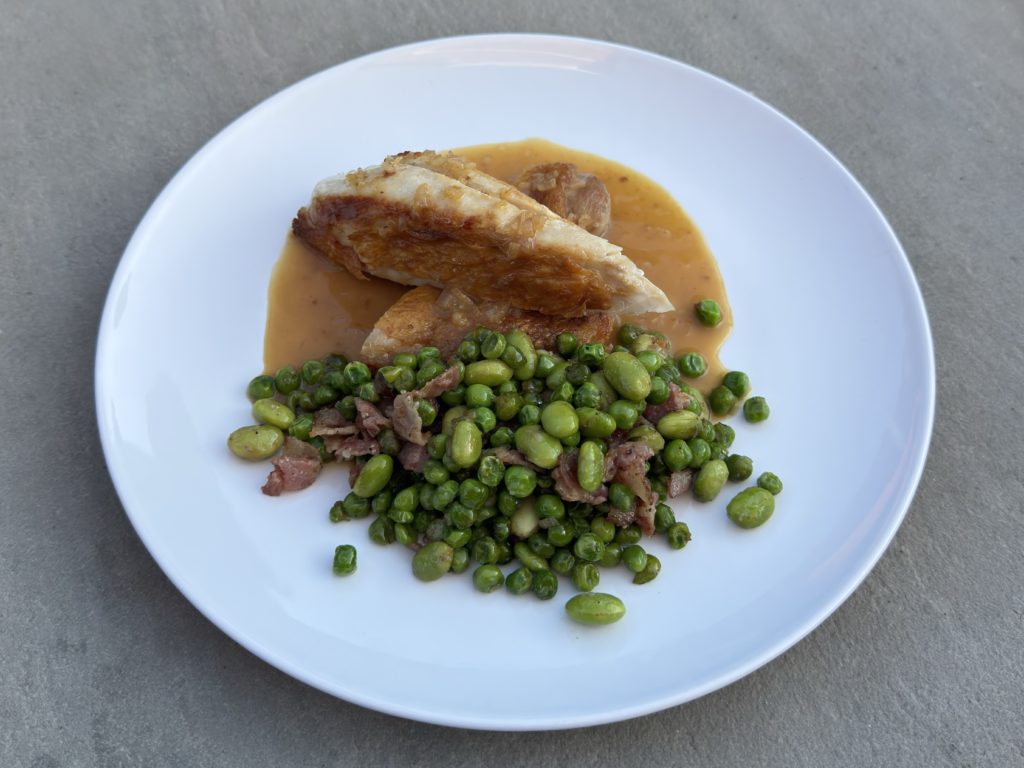
A piece of chicken on a plate is a piece of chicken. The same piece of chicken with a properly made sauce is a meal worth remembering. Sauce is what turns a protein and a side into a dish. It's what carries flavour, ties the components together, and gives the food the kind of depth that separates restaurant cooking from average home cooking.
Most home sauces fail in the same ways. They're thin. They taste flat. They sit beside the food rather than coating it. They reduce too far and concentrate the wrong flavours. Once you understand what a sauce actually needs to do — and what every great sauce has in common — you stop making sauces that disappoint and start making sauces that finish a dish properly.
My epiphany moment in cooking came from my first pan sauce. Before that, I cooked meals without sauces almost all the time — meat, a starch, vegetables, plated separately and eaten as components. Then I made a chicken with a simple pan sauce from the fond, deglazed with wine and finished with butter. It changed the entire meal. The chicken stopped being chicken and became part of a dish. Now I almost never plate food without a sauce of some kind. Sauce is the backbone of the meal — it carries flavour to every bite, ties the components together, and gives you somewhere to balance acid, salt, fat and richness in the final moments of cooking.
Why sauces matter
A sauce does three things at once. It carries flavour to every bite of the dish. It adds moisture that prevents the protein from feeling dry. And it ties together the different elements on the plate — the meat, the starch, the vegetables — so the dish reads as one thing rather than several things sitting next to each other.
Without sauce, a meal is a collection of components. With sauce, it becomes a dish. This is why restaurant food often tastes more cohesive than home cooking — restaurants almost always finish a plate with sauce, and they make their sauces with care.
Sauce also stretches your cooking. A well-made sauce can rescue a slightly overcooked piece of meat, lift a bland vegetable, or make a simple piece of fish feel intentional. It’s one of the highest-leverage things you can learn to make properly.
What every great sauce has in common
Whatever sauce you’re making — pan sauce, vinaigrette, gravy, reduction, emulsion — four elements show up in nearly every good one:
Body. The sauce has substance. It coats a spoon, clings to food, and doesn’t run thin across the plate. A sauce without body is just liquid sitting on the food.
Fat. Butter, oil, cream, egg yolk. Fat carries flavour and gives sauces their richness and silkiness. A sauce without fat tastes thin and metallic.
Salt. Brings every other flavour forward. Without enough salt, a sauce tastes muted no matter how good the ingredients.
Acid. Lemon juice, vinegar, wine, mustard. Cuts through richness, adds brightness, and stops the sauce feeling heavy. A sauce without acid feels one-dimensional, especially when it’s rich.
If a sauce is missing one of these, it falls flat. If it has all four in balance, it works.
Why most home sauces taste thin
Three reasons, in order of how often they’re the culprit:
The sauce hasn’t reduced enough. Reduction concentrates flavour. A sauce that started as 200ml of stock and got reduced to 80ml has more than twice the flavour intensity. Most home cooks pull the sauce off the heat too soon because it looks “sauce-like” already. It isn’t. Wait longer.
There’s no fat. Whisking a knob of butter into a sauce at the end transforms it. The sauce goes from thin and watery to glossy, rich, and properly coating. Most great sauces have a finishing fat — and most home cooks skip it.
It hasn’t been seasoned at the end. Reducing a sauce concentrates everything in it, including any salt. But you still need to taste at the very end and adjust. A reduced sauce that wasn’t seasoned correctly to start with will taste flat and slightly dull, even if it has body.
Reducing properly
Reducing a sauce means simmering it until water evaporates and what remains is more concentrated. Done well, it deepens flavour. Done badly, it concentrates harsh flavours and ruins the sauce.
The signs of a well-reduced sauce:
- It coats the back of a spoon and a finger drawn through it leaves a clear path
- It looks glossy rather than watery
- The colour deepens — pale liquid becomes amber, red wine becomes mahogany, stock becomes glossy brown
- It tastes intensely of itself, not watered down
The signs of an over-reduced sauce:
- It tastes overly salty (because the salt has concentrated faster than you wanted)
- The flavour becomes harsh or bitter
- It thickens too far and becomes paste-like rather than fluid
- The colour goes too dark and acrid
The fix for over-reduction is to add more unsalted liquid — stock, water, or wine — to bring it back. The fix for under-reduction is patience. Keep simmering.
Pan sauces and the fond
If you sear meat before serving it, you have the start of a pan sauce already in the pan. The browned residue stuck to the bottom of the pan — the fond — is concentrated flavour from the Maillard reaction. To turn it into a sauce:
- Remove the meat to rest. Pour off most of the fat from the pan, leaving a thin layer.
- Add chopped aromatics (shallot, garlic, herbs) to the pan and cook briefly until softened.
- Add a splash of liquid — wine, stock, or both — to deglaze. Scrape with a wooden spoon to dissolve the fond.
- Reduce the liquid to about a third. Taste. The flavour should be intense.
- Whisk in cold butter, a small piece at a time, off the heat. This is called mounting and creates a glossy, emulsified finish.
- Adjust salt and acid. A squeeze of lemon or splash of vinegar at the end lifts everything.
- Pour over the rested meat. Serve immediately.
This is the technique behind classic dishes like steak with peppercorn sauce, chicken with white wine sauce, and pork with apple and cider. It works with almost any seared protein.
I’ve made plenty of pan sauces that didn’t work. Two failures stand out. The first time I tried to mount butter into a sauce, I left the pan on the heat. The butter melted too fast, the fat separated from the reduction, and the whole thing split into a greasy mess. The fix is simple: pull the pan off the heat before adding the butter, and whisk in cold pieces gradually. Cold butter and lower temperature is what holds the emulsion together. The other was a sauce that turned bitter — I’d let the fond burn at the bottom of the pan during the searing because I’d waited too long to add liquid. The fond went from dark brown to black, and that bitterness carried through to the finished sauce. There’s a window between properly browned and burnt, and once you’re past it, no amount of butter or wine will save the sauce.
Coating vs sitting
A great sauce coats the food — it clings to it, glazing each piece. A poor sauce sits next to the food in a watery puddle. The difference is body.
Body comes from one of three things, depending on the sauce type:
Reduction. Cooking down the liquid until it concentrates and thickens naturally. The most flavourful method.
Emulsification. Combining fat and water-based liquid into a single smooth sauce. Vinaigrettes, hollandaise, beurre blanc, mayonnaise. Whisking incorporates air and creates the silky texture.
Thickening agents. Cornflour, flour, butter mounted in. Used carefully, these create body without diluting flavour. Used poorly, they make sauces feel gloopy and starchy.
Most great home sauces use the first two. Thickening agents are useful but should be a last resort, not a first choice.
Emulsions — the trickiest sauce
An emulsion is a stable mixture of fat and water-based liquid. Vinaigrettes, mayonnaise, hollandaise, beurre blanc — all emulsions. They feel silky in the mouth, coat food beautifully, and look glossy on the plate.
The challenge is that fat and water naturally don’t mix. To force them together, you need:
- An emulsifier — mustard in a vinaigrette, egg yolk in mayonnaise or hollandaise, cold butter mounted into a reduction
- Steady whisking to break the fat into tiny droplets suspended in the liquid
- The right temperature — too hot and the emulsion breaks, too cold and it won’t form
When emulsions break — when the sauce splits into a watery mess with separated fat — it’s almost always because the fat was added too fast or the temperature was too high. Add fat slowly. Whisk constantly. Pull from the heat the moment things start looking unstable.
Thickening with restraint
Cornflour, flour, and butter all thicken sauces. Used carefully, they’re useful tools. Used too much, they ruin a sauce.
Cornflour slurry. Cornflour mixed with cold water before adding to hot liquid. Quick, neutral in flavour, but easy to overdo. Add a tablespoon at a time, simmer for 30 seconds, taste before adding more. A sauce thickened too much with cornflour has a slightly slimy, gel-like texture.
Flour and roux. Used in classic sauces like béchamel and gravy. Cook flour in fat first to remove the raw taste. Roux thickens slowly and gives a stable, opaque finish. Best for sauces that will be cooked further or served immediately — they break down if held too long.
Butter mounted in. The most elegant thickener. Cold butter whisked into a hot reduction at the end gives gloss, body, and richness without changing the flavour. Use sparingly — too much and the sauce becomes greasy.
The rule for thickening is the same as seasoning: less is more, and you can always add more, but you can’t take it back.
The honest truth
Sauce is the thing that finishes a dish. A great piece of meat with no sauce is a meal. A great piece of meat with a properly made sauce is a memorable meal. The gap between those two is bigger than most people realise.
Get the four elements right — body, fat, salt, acid. Reduce until the flavour is concentrated. Finish with butter and a final splash of acid. Taste at the end and adjust. That’s most sauces.
The technique varies, but the principles don’t. Once you understand what every sauce is trying to be, the specific recipes get easier.
Key Takeaways
- Every great sauce balances four things — body, fat, salt, and acid
- Most home sauces are too thin because they haven't reduced enough or are missing finishing fat
- The fond left in the pan from searing is the start of a pan sauce — don't waste it
- Taste and adjust at the very end — reduction concentrates everything, including salt