
How to Cook Chicken to Temperature
Colour and juices tell you almost nothing. Temperature tells you everything.
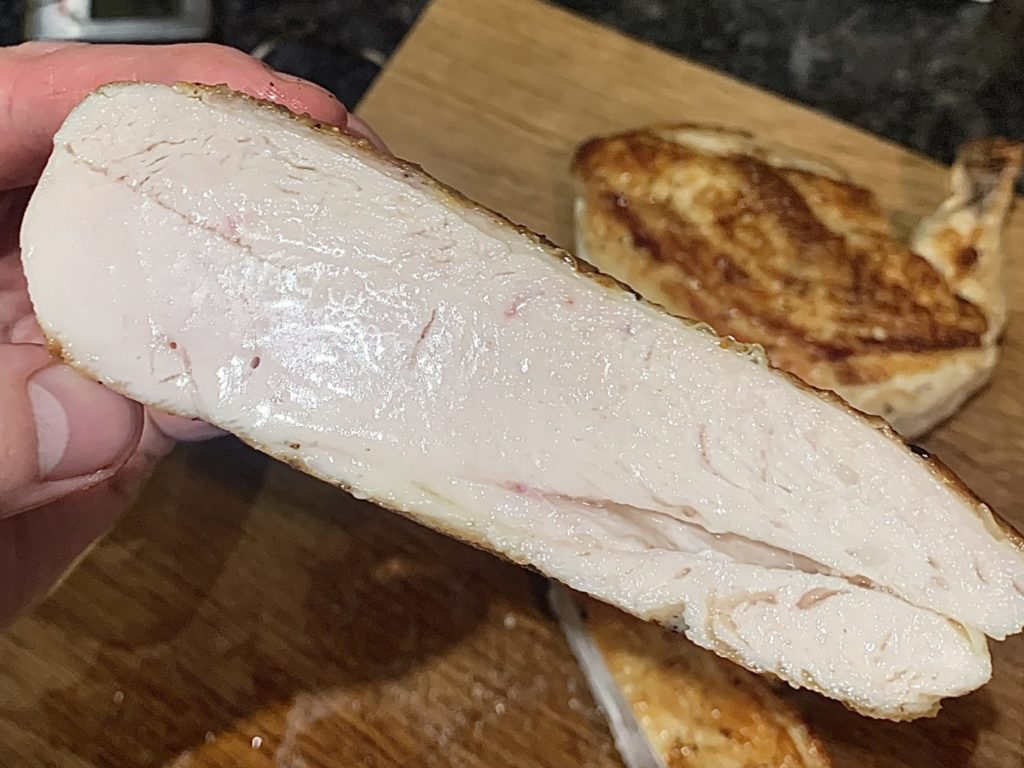
Chicken is the protein people are most afraid of undercooking and most likely to overcook as a result. The fear is understandable — undercooked chicken carries real food safety risk. But the response to that fear — cooking it until it's white all the way through and the juices run completely clear — produces dry, disappointing meat that doesn't have to be dry or disappointing at all.
The solution is the same as for any other protein. A thermometer. Different cuts of chicken have different target temperatures, different tolerances, and different textures at their best. Understanding those differences is the difference between chicken you have to force down and chicken you actually want to eat.
Why colour is an unreliable guide
The traditional tests for cooked chicken — juices run clear, no pink at the bone, white all the way through — are imprecise at best and actively misleading at worst. Juices can run clear before the meat is safe. Meat near the bone can look pink in fully cooked chicken due to the haemoglobin in younger birds. And cooking until everything is white virtually guarantees overcooked breast meat.
A thermometer removes all of this ambiguity. When the probe reads the right number, the chicken is safe and — if you’ve pulled it at the right moment — still juicy. There is no guesswork involved.
Chicken breast
Breast meat is lean, with very little fat or connective tissue to protect it from heat. It dries out faster than any other part of the bird and has almost no margin for overcooking. This is why chicken breast has a reputation for being dry — not because it is inherently dry, but because it is almost always overcooked.
Pull breast meat at 65°C. With a proper rest, the internal temperature will rise to around 72°C — which is safe, juicy, and a completely different texture from breast cooked to 75°C or above. The rest is not optional here. It is the step that finishes the cooking safely while keeping the moisture in the meat.
At 65°C the breast will look cooked through with no translucency. It will not be pink. The texture will be firm but yielding — nothing like the chalky, stringy result of breast taken to 75°C and beyond.
Probe placement matters. Insert the thermometer into the thickest part of the breast, away from bone. The thickest part is the last to reach temperature — if that reads 65°C, the rest of the breast is already there.
Chicken thighs
Thigh meat is far different to breast. It is a working muscle, dark with fat and collagen running through it, and it is far more forgiving of heat than breast. Where breast dries out quickly above its ideal temperature, thigh improves with it.
Pull thighs at 79°C. At this temperature the fat has rendered properly through the meat, the collagen has softened, and the texture is yielding and juicy in a way that breast never is. Thigh cooked to 75°C is fine. Thigh cooked to 82°C is still fine. The window is wide.
For skin-on thighs, the skin needs to render and crisp separately from the internal temperature question — a thigh at 79°C with pale, rubbery skin is not finished. Render the skin properly at high heat first, then finish to temperature in the oven if needed.
Because thighs are so forgiving, temperature probing is less critical than for breast. Visual and textural cues — rendered skin, meat pulling away from the bone cleanly, juices running clear at the joint — are reliable enough for experienced cooks. But if you’re unsure, probe it. 79°C is the number.
Whole bird
A whole chicken presents a specific challenge: the breast and thigh are different thicknesses, different muscle types, and ideally want to reach different temperatures at the same time. In a standard roast this is difficult. Spatchcocking — removing the backbone and flattening the bird — solves most of it by bringing the breast and thigh to a more even thickness and exposing both to direct heat simultaneously.
For a whole bird or spatchcocked chicken, probe the breast at its thickest point. Pull at 68°C breast temperature. The thighs will be at or above 79°C by the time the breast is there — breast is thicker and slower to cook, so probing the breast gives you the most conservative and reliable reading.
Rest a whole bird for at least 15 minutes before carving. The temperature will continue to rise and redistribute through the meat during that time.
Food safety — what the numbers mean
The traditional UK food safety guideline is 75°C throughout. This is a conservative figure based on an instantaneous kill temperature — the point at which pathogens are destroyed immediately at that temperature.
What that guideline doesn’t account for is that lower temperatures held for longer achieve the same result. Chicken held at 65°C for one minute is as safe as chicken brought to 75°C instantly. This is the science behind pulling breast at 65°C with a rest — the rest period at elevated temperature completes the process safely.
The practical implication: cook to temperature, rest properly, and the result is both safe and far better to eat than chicken taken to 75°C and served immediately.
The honest truth
Overcooked chicken breast is one of the most common disappointments in home cooking, and it is entirely avoidable. The habit of cooking it until “definitely done” — until there is no possible doubt — adds ten degrees and all the moisture to the bin.
Pull it at 65°C. Rest it. The texture will be better than any chicken breast you’ve cooked before, and the food safety concern is addressed by the rest, not by overcooking. A thermometer costs less than a good chicken. Buy one and use it.
Temperature reference list
- Breast — pull at 65°C (~72°C after resting) — Rest is essential. It finishes the cooking safely and keeps the moisture in the meat.
- Thigh, bone-in — pull at 79°C — Fat renders properly at this temperature. Forgiving cut with a wide window either side.
- Thigh, boneless — pull at 79°C — Same target, cooks faster than bone-in.
- Whole bird — probe the breast, pull at 68°C (~74°C after resting) — Thighs will be at or above 79°C by the time the breast is there.
Key Takeaways
- Pull chicken breast at 65°C and rest properly — the temperature rises to a safe temperature and the texture is far better than breast taken higher.
- Thighs are forgiving — 79°C is the target, but the fat and collagen make them resilient to a few degrees higher.
- For a whole bird, probe the breast — it's the thickest, slowest part and the most critical temperature to nail.
- Colour and juices are unreliable guides — a thermometer is the only test worth trusting.