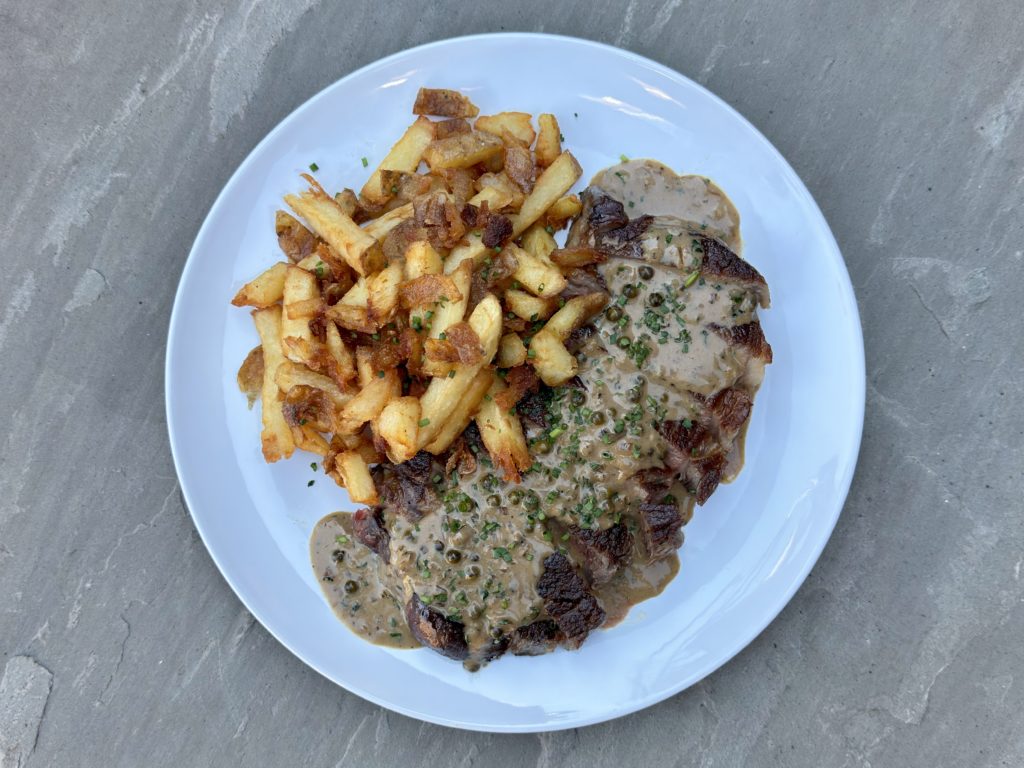
How to Cook Steak to Temperature
A thermometer tells you more about your steak than any other method. Here's how to use one properly.
The most common reason a good steak disappoints is temperature. Not the seasoning, not the pan, not the resting — the temperature it was cooked to. Too high and the meat is dry and grey throughout. Too low and the texture is unpleasant in a different way. Hit the right temperature and the same steak, from the same pan, tastes like a completely different piece of meat.
The solution is a thermometer. Not a guess, not the touch method, not cutting into it to check. A thermometer. It costs less than a single steak, works every time, and removes the only real variable you can't control by feel alone.
What follows is a complete guide to steak temperatures — what to aim for, how different cuts behave, and how to think about the breed and quality of beef you're starting with.
Why temperature matters more than time
Cooking time is almost useless as a guide for steak. A 200g sirloin and a 350g ribeye cook to the same internal temperature at completely different rates, even in the same pan at the same heat. The thickness, the starting temperature of the meat, the heat retention of the pan, the fat content of the cut — all of it changes the time. None of it changes the target temperature.
Cooking to temperature instead of time removes all of that guesswork. When the thermometer reads the right number, the steak is done. No poking, no cutting, no hoping.
The temperature guide
These are the temperatures to pull the steak from the heat — not the final eating temperature. Carryover cooking will raise the internal temperature by around 3-5°C during resting, so pulling early is built into the numbers below.
- Rare — pull at 46-49°C. Deep red centre, very soft texture. Best for cuts with enough fat or connective tissue to carry the texture — ribeye, onglet, hanger.
- Medium-rare — pull at 52-54°C. Pink throughout with a slightly firmer texture than rare. The sweet spot for most cuts and most palates. Where the fat in a well-marbled steak starts to melt properly.
- Medium — pull at 57-60°C. Pink in the centre only, firmer texture. Still juicy in a well-marbled cut.
- Medium-well — pull at 63-65°C. Barely pink. A well-marbled cut will survive here; a lean one will be noticeably drier.
- Well-done — above 70°C. No pink, fully firm. See the honest truth section below.
How different cuts behave
Not all steaks are best at the same temperature. The fat content and muscle structure of a cut determines where it peaks.
Ribeye. The most forgiving cut. Heavy marbling means it stays juicy across a wider temperature range. Best at medium-rare (52-54°C pull) where the fat starts to render into the meat. Can handle medium without drying out.
Sirloin. Less marbled than ribeye but with a fat cap that bastes the meat during cooking. Best at medium-rare to medium (54-57°C pull). Lean enough that well-done is a waste of a good cut.
Fillet. The leanest of the premium cuts and the most naturally tender. Very little fat means very little margin for error — overcook a fillet and it dries out quickly. Best at rare to medium-rare (48-54°C pull). The tenderness at rare is exceptional and needs nothing to compensate for lack of fat.
Rump. More flavour than fillet, more chew than ribeye. Dense muscle structure means it benefits from medium-rare (54°C pull) and a proper rest. Chewy when undercooked, dry when overcooked — the window is narrower than ribeye.
Onglet (hanger) and skirt. Heavily grained, intensely flavoured working muscles. Best eaten rare to medium-rare (48-52°C pull) — the grain opens up and the texture is excellent. Overcooked, they become tough and stringy very quickly. Always slice against the grain.
Flat iron. Surprisingly tender for a working muscle cut, with good marbling. Best at medium-rare (52-54°C pull). An underrated cut at a lower price point than ribeye.
Breed and quality — not all steaks are equal
The breed of cattle and how it was raised affects flavour, marbling, and texture in ways that temperature alone can’t compensate for. Starting with better beef makes a bigger difference than almost any technique adjustment.
Aberdeen Angus is the most reliable all-rounder available in the UK. Good marbling, consistent quality, and widely available in better supermarkets and butchers. Waitrose dry-aged Aberdeen Angus is worth seeking out — well-marbled, properly aged, and available cut to thickness on request. It is a categorically different product from a thin, vacuum-packed supermarket steak, and the price difference reflects that.
Dry-aged beef — regardless of breed — develops deeper, more complex flavour as moisture evaporates and enzymes break down the muscle fibres over weeks. A 28-day dry-aged steak tastes noticeably more intense than the same cut fresh. A 45-day aged steak more so. The crust that forms during ageing (the pellicle) is trimmed before sale, but the flavour it imparts remains. If you can access dry-aged beef, it is worth the premium.
Galician ex-dairy cattle — particularly from the Galicia region of northern Spain — represent some of the most intensely flavoured beef available. These are older animals, often ten years or more, with years of fat development that gives the meat a richness and depth that young beef simply cannot match. The fat is often deeply yellow. The flavour is extraordinary. Available from specialist online butchers in the UK and worth ordering for a special occasion. It is not an everyday steak — it is a different experience from everyday beef.
Wagyu has become something of a buzzword and deserves a straightforward note. Genuine A5 Japanese Wagyu is extraordinary — so heavily marbled that it is almost more fat than muscle, best eaten in small portions and at medium-rare where that fat melts through the meat. It is also genuinely expensive. The problem is that “Wagyu” on a UK menu or supermarket label often means Wagyu cross — cattle with some Wagyu genetics but nowhere near the marbling of the real thing. It is not a bad steak, but it is not what the label implies. If you are paying a premium for Wagyu, check the grade and the provenance before assuming it is the real thing.
How to take the temperature correctly
Insert the thermometer probe into the thickest part of the steak, away from any bone and away from the fat cap. You want the reading from the centre of the muscle. Hitting a pocket of fat will give you a falsely high reading; getting too close to the surface will give you a falsely high reading for a different reason.
On a thick steak, probe from the side rather than the top — it’s easier to find the true centre. The probe should go in horizontally, reaching the middle of the steak.
Pull the steak from the heat the moment it hits the target temperature. Don’t wait. Every extra second in the pan is a few more degrees of carryover on the way.
Resting
Rest a thick steak for at least 10 minutes before cutting. The heat of cooking drives moisture to the centre of the meat — resting allows it to redistribute back through the muscle. Cut immediately and it runs straight onto the board. Rest it properly and it stays in the meat where it belongs.
Rest on a warm plate or tray, loosely tented with foil if your kitchen is cold. Save the resting juices — they belong in the sauce.
The honest truth on well-done steak
A well-done steak is a dry steak. There is no cut, no technique, and no amount of resting that changes the physics — at 70°C and above, the muscle fibres have contracted fully and driven out their moisture. The fat has rendered away. What’s left is edible but it is not what the cut was capable of.
That said, taste is personal and the preference deserves respect. If you always eat your steak well-done, the only suggestion worth making is to try it at medium just once. Not because well-done is wrong, but because the same cut tastes like a completely different piece of meat at a lower temperature and the comparison is worth experiencing.
My girlfriend ate steak well-done for years until I persuaded her to try it at medium. That was the last well-done steak she ordered. She’ll eat it at any temperature now — she’s even tried steak tartare. The conversion rate, in my experience, is high.
The honest truth on thermometers
The touch method — pressing the steak and comparing the resistance to parts of your hand — is unreliable. It varies with the cut, the thickness, the fat content, and how much practice you’ve had with that specific type of steak. Professionals who use it have cooked thousands of steaks and developed a feel for specific cuts in specific pans. For everyone else, it’s an educated guess.
A thermometer is not a crutch. It is the correct tool for the job. Professional kitchens use them constantly — not because the chefs can’t cook, but because accuracy matters and guessing introduces unnecessary risk. Buy a good instant-read thermometer and use it every time. The steak will be better for it.
Temperature reference list
- Rare — pull at 46-49°C (~52°C after resting) — Best for ribeye, onglet, skirt, flat iron. Fillet is exceptional at this temperature — naturally tender with no fat needed to compensate.
- Medium-rare — pull at 52-54°C (~57°C after resting) — The sweet spot for most cuts and most palates. Where the fat in a well-marbled steak starts to melt properly. Fillet, ribeye, sirloin, rump all peak here.
- Medium — pull at 57-60°C (~63°C after resting) — Still juicy in well-marbled cuts. Ribeye handles this well; fillet and leaner cuts begin to lose moisture here.
- Medium-well — pull at 63-65°C (~68°C after resting) — Well-marbled cuts only. Ribeye survives; leaner cuts will be noticeably drier.
- Well-done — 70°C+ — Not recommended. See the honest truth section above.
Key Takeaways
- Always use a thermometer — pull temperatures are the only reliable guide to doneness across different cuts and thicknesses.
- Pull the steak 3-5°C before your target temperature — carryover cooking during resting does the rest.
- Different cuts peak at different temperatures — a lean fillet and a marbled ribeye are not best at the same point.
- Rest thick steaks for at least 10 minutes before cutting — the juice stays in the meat, not on the board.
Recipes that use this