Steak frites is one of those dishes that looks like a restaurant order and cooks like a home one. A properly seared steak, a pile of crispy chips, and a peppercorn sauce built in the same pan — it's the kind of meal that justifies owning a cast iron skillet.
The sauce is sauce au poivre, a French classic. The method here is straightforward: deglaze the steak pan, build the sauce in stages, finish with cream. The result is rich, peppery, and exactly what it should be.
Ingredients
- Steak
- 2 Ribeye steaks, 1 inch thick, see notes
- Fine sea salt, to season
- Neutral oil, for searing
- Chips
- 700 g Maris Piper potatoes
- 1500 g Neutral deep frying oil
- Peppercorn sauce
- 4 g Black pepper, freshly ground
- 15 g Butter
- 1 Shallots, finely diced
- 1 cloves Garlic, minced
- 75 ml Brandy
- 150 ml Beef stock, reduced, see notes
- 30 g Double cream
- 20 g Green peppercorns in brine, optional
- 5 g Fresh lemon juice, to taste
- 5 g Flat-leaf parsley, finely chopped
Equipment
- Cast-iron skillet
- Large heavy casserole or deep fryer
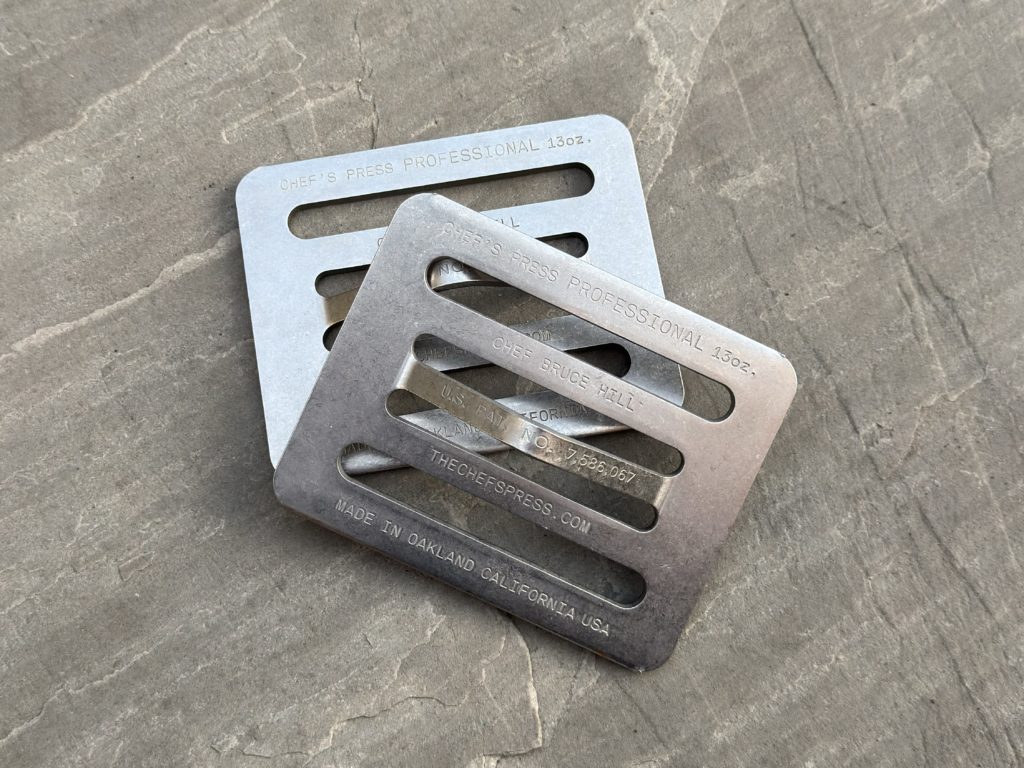
- Chef's press
- Meat thermometer
- Wire rack
- Oil thermometer
Method
Season the steaks generously on all sides with fine sea salt. Place uncovered on a rack in the fridge overnight.
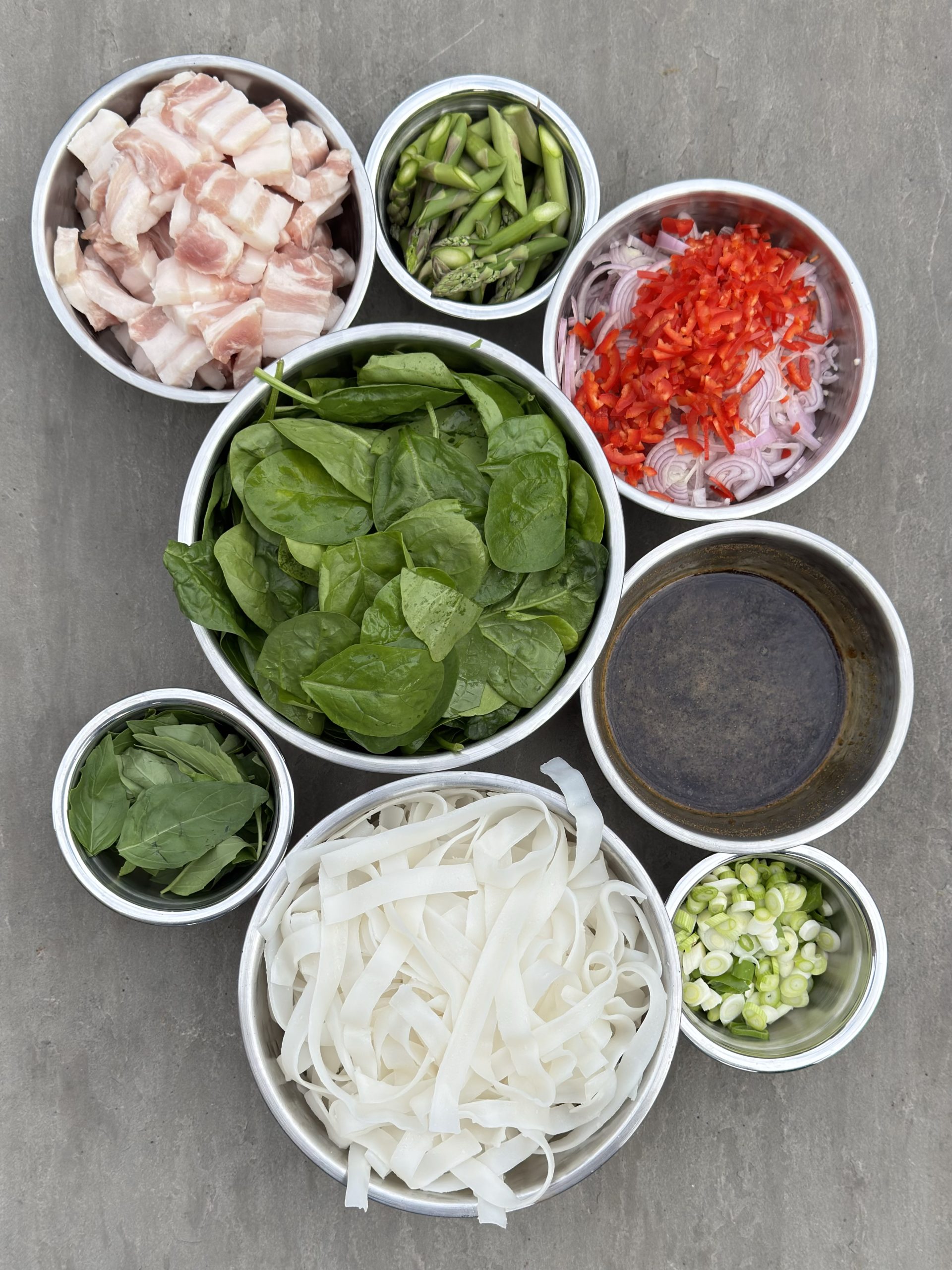
Before anything goes on the heat, get everything ready. Dice the shallots, mince the garlic, measure the brandy, beef stock, and double cream into separate containers, weigh the butter, chop the flat-leaf parsley. Get the neutral oil in the casserole ready for frying. See mise en place — the sauce comes together quickly once the steak is rested and there is no time to stop mid-cook.
Cut the Maris Piper potatoes into 1cm x 1cm chips, leaving the skin on. Rinse in a colander under cold water until the water runs clear, then transfer to a saucepan and cover with cold salted water. Bring to the boil and cook until the outside looks slightly grainy and the chips are just starting to soften — they should hold their shape but feel slightly tender when pressed.
Drain the chips and spread in a single layer on a wire rack. Leave to steam dry for at least 10 minutes — you want as much surface moisture gone as possible before they go near the oil.
Fill the casserole with neutral oil 8–10cm deep and bring slowly to 180°C (355°F) — use a thermometer. At the same time, place the cast-iron skillet over high heat and leave it for at least 3–4 minutes until smoking.
Add a drizzle of neutral oil to the smoking skillet. Place the ribeye steaks in the pan and immediately put the chef’s press on top. Sear without moving for 2–3 minutes until deeply browned, then flip and repeat on the other side. Use a meat thermometer to cook to your target temperature — see the temperature guide in the pro tip. For a crust on the fat cap, hold the steak on its side with tongs for 30–60 seconds. See how to sear properly for the full technique.
Transfer the steaks to a tray and leave to rest for at least 5 minutes. Save any resting juices — they go into the sauce.
Once the oil is at 180°C (355°F), lower the chips in carefully using a spider or slotted spoon. Don’t overcrowd — fry in batches if needed. Cook until golden and crispy, around 4–6 minutes. Drain on kitchen paper and season immediately with fine sea salt.
Remove the cast-iron skillet from the heat and allow it to cool for a minute or two. Return to a medium heat. Add the ground black pepper and toast for 30 seconds until fragrant, then add the butter. Once foaming, add the shallots and cook gently until softened but not coloured — around 2 minutes. Add the garlic and stir for one minute.
Pour in the brandy and let it reduce by half, scraping up any fond from the base of the pan as you go.
Pour in the beef stock and the resting juices from the steaks. Bring to a simmer and reduce until well thickened — the sauce should coat the back of a spoon and hold a line when you run your finger through it.
Add the double cream and stir to combine. Taste and season with fine sea salt, then finish with a small squeeze of fresh lemon juice, the green peppercorns in brine if using, and the chopped flat-leaf parsley. The lemon should be barely detectable — it’s there to lift the richness, not to taste of lemon.
Slice the rested ribeye steaks and arrange on warmed plates. Spoon the peppercorn sauce generously over and alongside. Pile the chips next to the steak and serve immediately.
Notes & Substitutions
Steak choice: Ribeye is the first choice — well-marbled, with fat that melts into the meat during cooking and bastes it from the inside. Look for good marbling and dry-aged beef where possible. A steak under an inch thick will overcook before it colours properly. Lean, thin, vacuum-packed supermarket steaks are a false economy at any price point — buy better and buy less often if needed.
Beef stock: Use the best you can find. A good reduced beef stock, demi-glace, or bone broth will give the sauce real body and depth. Standard supermarket stock will still work but will need more careful reducing to reach the right consistency. Making your own is worth it if you have the time — see the beef stock recipe.
Green peppercorns: Fresh green peppercorns are mild, fruity, and less sharp than dried or brined ones. They’re optional but worth sourcing — they add a different dimension to the pepper flavour in the finished sauce. Some larger supermarkets stock them fresh; Asian grocers are a reliable source. Brined ones will still work but are intense — use sparingly.
Asparagus: Goes well alongside — pan-fry in butter for 3–4 minutes until just tender and lightly coloured.
You might also like
Steak Frites with Peppercorn Sauce
Steak frites is one of those dishes that looks like a restaurant order and cooks like a home one. A properly seared steak, a pile of crispy chips, and a peppercorn sauce built in the same pan — it's the kind of meal that justifies owning a cast iron skillet.
The sauce is sauce au poivre, a French classic. The method here is straightforward: deglaze the steak pan, build the sauce in stages, finish with cream. The result is rich, peppery, and exactly what it should be.
Ingredients
- 2 Ribeye steaks (1 inch thick, see notes)
- Fine sea salt (to season)
- Neutral oil (for searing)
- 700 g Maris Piper potatoes
- 1500 g Neutral deep frying oil
- 4 g Black pepper (freshly ground)
- 15 g Butter
- 1 Shallots (finely diced)
- 1 cloves Garlic (minced)
- 75 ml Brandy
- 150 ml Beef stock (reduced, see notes)
- 30 g Double cream
- 20 g Green peppercorns in brine (optional)
- 5 g Fresh lemon juice (to taste)
- 5 g Flat-leaf parsley (finely chopped)
Equipment
- Cast-iron skillet
- Large heavy casserole or deep fryer
- Chef's press
- Meat thermometer
- Wire rack
- Oil thermometer
Method
Season the steaks (night before)
Season the steaks generously on all sides with fine sea salt. Place uncovered on a rack in the fridge overnight.
For this step: 2 Ribeye steaks, Fine sea salt
Mise en place
Before anything goes on the heat, get everything ready. Dice the shallots, mince the garlic, measure the brandy, beef stock, and double cream into separate containers, weigh the butter, chop the flat-leaf parsley. Get the neutral oil in the casserole ready for frying. See mise en place — the sauce comes together quickly once the steak is rested and there is no time to stop mid-cook.
For this step: 1 Shallots, 1 cloves Garlic, 75 ml Brandy, 150 ml Beef stock, 30 g Double cream
Prep and blanch the chips
Cut the Maris Piper potatoes into 1cm x 1cm chips, leaving the skin on. Rinse in a colander under cold water until the water runs clear, then transfer to a saucepan and cover with cold salted water. Bring to the boil and cook until the outside looks slightly grainy and the chips are just starting to soften — they should hold their shape but feel slightly tender when pressed.
For this step: 700 g Maris Piper potatoes
Steam dry the chips
Drain the chips and spread in a single layer on a wire rack. Leave to steam dry for at least 10 minutes — you want as much surface moisture gone as possible before they go near the oil.
Get the pan and oil up to temperature
Fill the casserole with neutral oil 8–10cm deep and bring slowly to 180°C (355°F) — use a thermometer. At the same time, place the cast-iron skillet over high heat and leave it for at least 3–4 minutes until smoking.
For this step: 1500 g Neutral deep frying oil
Sear the steaks
Add a drizzle of neutral oil to the smoking skillet. Place the ribeye steaks in the pan and immediately put the chef’s press on top. Sear without moving for 2–3 minutes until deeply browned, then flip and repeat on the other side. Use a meat thermometer to cook to your target temperature — see the temperature guide in the pro tip. For a crust on the fat cap, hold the steak on its side with tongs for 30–60 seconds. See how to sear properly for the full technique.
For this step: Neutral oil
Rest the steaks
Transfer the steaks to a tray and leave to rest for at least 5 minutes. Save any resting juices — they go into the sauce.
Fry the chips
Once the oil is at 180°C (355°F), lower the chips in carefully using a spider or slotted spoon. Don’t overcrowd — fry in batches if needed. Cook until golden and crispy, around 4–6 minutes. Drain on kitchen paper and season immediately with fine sea salt.
Build the sauce base
Remove the cast-iron skillet from the heat and allow it to cool for a minute or two. Return to a medium heat. Add the ground black pepper and toast for 30 seconds until fragrant, then add the butter. Once foaming, add the shallots and cook gently until softened but not coloured — around 2 minutes. Add the garlic and stir for one minute.
For this step: 4 g Black pepper, 15 g Butter
Deglaze with brandy
Pour in the brandy and let it reduce by half, scraping up any fond from the base of the pan as you go.
Add stock and reduce
Pour in the beef stock and the resting juices from the steaks. Bring to a simmer and reduce until well thickened — the sauce should coat the back of a spoon and hold a line when you run your finger through it.
Finish the sauce
Add the double cream and stir to combine. Taste and season with fine sea salt, then finish with a small squeeze of fresh lemon juice, the green peppercorns in brine if using, and the chopped flat-leaf parsley. The lemon should be barely detectable — it’s there to lift the richness, not to taste of lemon.
For this step: 20 g Green peppercorns in brine, 5 g Fresh lemon juice, 5 g Flat-leaf parsley
Slice and serve
Slice the rested ribeye steaks and arrange on warmed plates. Spoon the peppercorn sauce generously over and alongside. Pile the chips next to the steak and serve immediately.
Notes & Substitutions
Steak choice: Ribeye is the first choice — well-marbled, with fat that melts into the meat during cooking and bastes it from the inside. Look for good marbling and dry-aged beef where possible. A steak under an inch thick will overcook before it colours properly. Lean, thin, vacuum-packed supermarket steaks are a false economy at any price point — buy better and buy less often if needed.
Beef stock: Use the best you can find. A good reduced beef stock, demi-glace, or bone broth will give the sauce real body and depth. Standard supermarket stock will still work but will need more careful reducing to reach the right consistency. Making your own is worth it if you have the time — see the beef stock recipe.
Green peppercorns: Fresh green peppercorns are mild, fruity, and less sharp than dried or brined ones. They’re optional but worth sourcing — they add a different dimension to the pepper flavour in the finished sauce. Some larger supermarkets stock them fresh; Asian grocers are a reliable source. Brined ones will still work but are intense — use sparingly.
Asparagus: Goes well alongside — pan-fry in butter for 3–4 minutes until just tender and lightly coloured.

Free guide: How to Cook Properly
How to Cook Properly — the 11 principles that turn average into outstanding
Equipment worth having
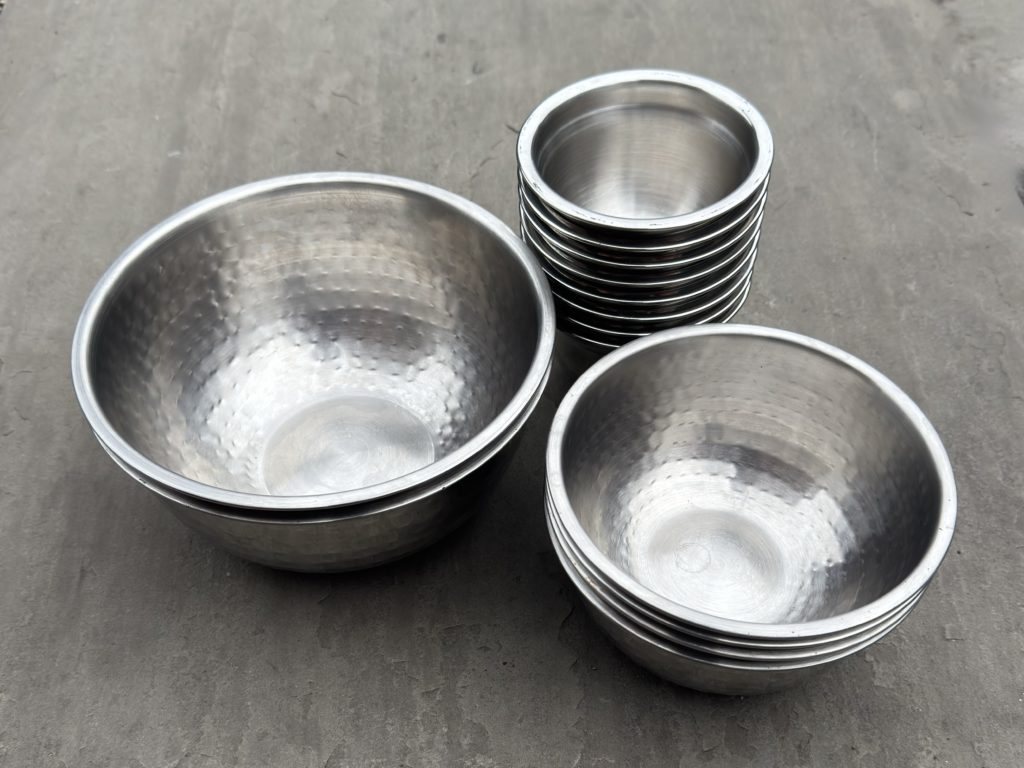
One bowl per ingredient. It sounds simple. It changes everything.
£25-£75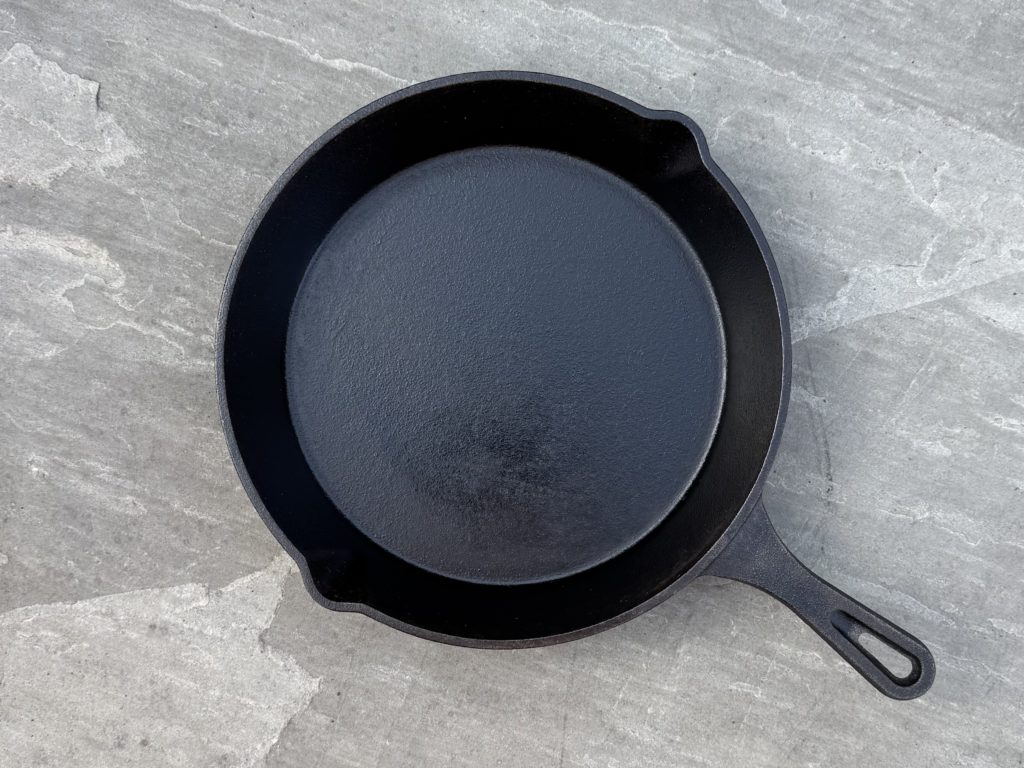
One bowl per ingredient. It sounds simple. It changes everything.
£25-£75
One bowl per ingredient. It sounds simple. It changes everything.
£25-£75
Shape what comes next
Got a recipe you'd love to see, or an idea to make the site better? We read every suggestion.
Log in to suggest