Mise en Place
Getting everything ready before you cook isn't just a professional technique — it's the single habit most likely to make cooking less stressful and more enjoyable.
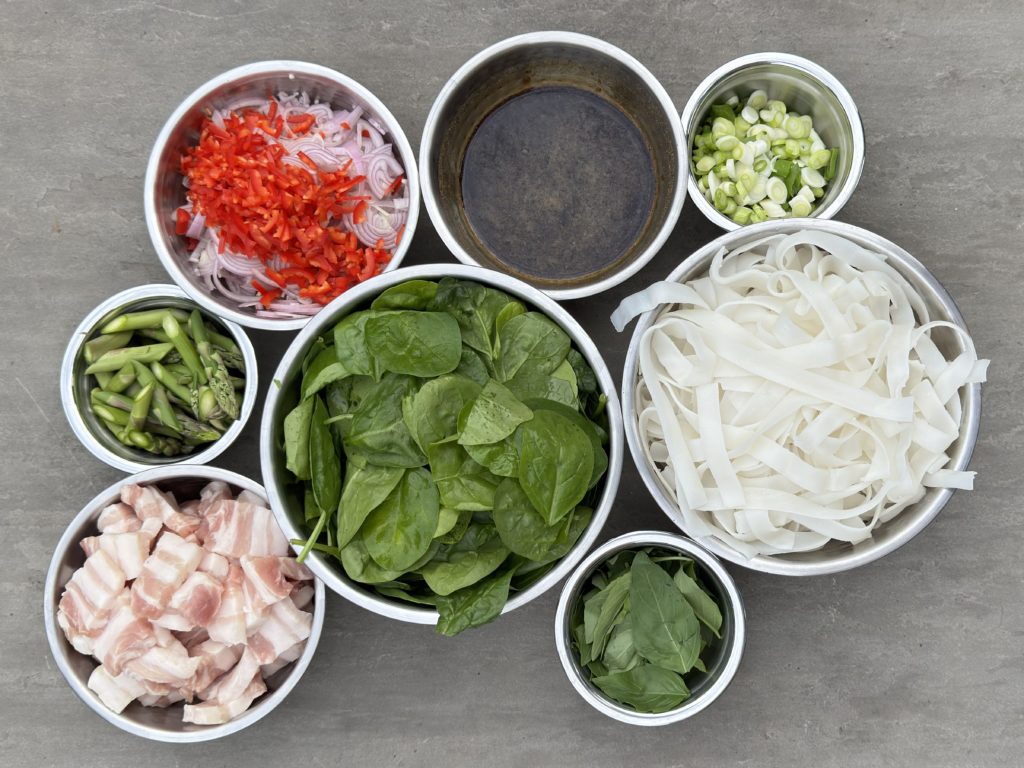
Mise en place is a French phrase that translates roughly as "everything in its place." In a professional kitchen it describes the discipline of having every ingredient prepped, measured, and within reach before cooking begins. In a home kitchen it means the same thing — and the difference it makes is immediate.
Most cooking mistakes are not skill mistakes. They are timing mistakes. Something burns while you're chopping something else. A sauce reduces too far while you're searching for the cream. A steak overcooks while you're mincing garlic. Mise en place removes the conditions that allow those mistakes to happen.
It also makes cooking more enjoyable. When everything is ready before the heat goes on, you can focus entirely on the cooking rather than splitting your attention between the pan and the chopping board. That shift — from reactive to in control — changes the experience of cooking entirely.
What mise en place actually means
In a professional kitchen, mise en place is not optional. A chef arriving at their station without their prep done is not ready to cook. The mise en place is the preparation — every vegetable diced, every sauce reduced, every garnish picked and ready — that allows the actual cooking to happen at speed without error. Service in a restaurant kitchen moves too fast for any other approach.
At home, the pace is different but the principle is the same. Before anything goes on the heat, you should know exactly what you need, have it prepped to the right size and in the right quantity, and have it positioned within reach of where you’ll be cooking. The cooking itself then becomes the focus — not a race against a pan that’s getting too hot while you’re still peeling garlic.
Why professional kitchens do it
Professional kitchens use mise en place for three reasons: speed, consistency, and control. A chef cooking fifty covers a night cannot stop mid-service to chop a shallot. Every element of every dish has to be ready before the first ticket comes in. The mise en place is what makes service possible.
Consistency is the second reason. When ingredients are prepped to a specific size and quantity in advance, the dish comes out the same way every time. Dicing an onion while a pan is on the heat produces uneven pieces because you’re rushing. Dicing it before the heat goes on produces even pieces because you have time.
Control is the third. A cook who has their mise en place is thinking about the cooking — the heat, the colour, the timing, the seasoning. A cook who doesn’t is thinking about what they still need to prep. The two things compete for attention, and the cooking suffers.
The enjoyment argument
Beyond the practical benefits, mise en place changes how cooking feels. Without it, cooking is reactive — you’re constantly catching up, managing multiple things at once, trying to prep and cook simultaneously while something sits on the heat waiting. It’s stressful in a way that makes people not want to cook.
With it, cooking is active and focused. Once the prep is done and the heat goes on, the only job is the cooking itself. You can pay attention to the colour developing in the pan, the smell changing as the garlic softens, the sound of the oil when the temperature is right. That kind of attention is what makes food taste better — and it is only possible when you’re not simultaneously trying to dice a shallot.
The bowls help. I use a set of stackable stainless steel prep bowls — around fifteen small, ten medium, two large and one extra large — and all of them get used daily. Each prepped ingredient gets its own bowl, positioned in the order it goes into the pan. It sounds like a small thing. It changes everything. See the prep bowls equipment guide [LINK PLACEHOLDER] for what to look for.
When to do full mise en place — and when to adapt
Not every dish requires everything prepped before the heat goes on. The approach depends on the pace and structure of the cooking.
Full mise en place before the heat goes on. Any dish that moves fast once it starts — stir fries, pan sauces, smash burgers, anything in a screaming hot wok or cast iron pan. These dishes don’t pause. If you stop to chop something, the pan continues cooking without you. Everything must be ready before the first ingredient goes in.
Staged mise en place. Some dishes have natural breaks built in — a braise that simmers for an hour, an onion that needs 20 minutes to caramelise, a potato that bakes for 80 minutes. These dishes give you time to prep the next stage while the current one cooks. The key is reading the recipe first and identifying those windows. If the gravy simmers for 30 minutes while the sausages cook, that’s 30 minutes to prep the mash. The mise en place happens in stages rather than all at once.
Long and slow. A stock simmering for eight hours, a shoulder braising in a low oven — these dishes are almost entirely hands-off once they’re going. The prep is minimal and the cooking does the work. Mise en place still matters at the start, but the pace is forgiving in a way that a stir fry is not.
All recipes on this site include a mise en place step that tells you what needs to be ready before the heat goes on and what can be prepped during cooking. Reading that step before you start is the most useful thing you can do.
How to actually do it
Read the recipe all the way through before you start. Not skimming — reading. Understand what happens at each stage, what each ingredient does, and when it goes in. This is the step most home cooks skip, and it is the step that causes most of the problems.
Then work through the prep in order of what takes longest. If the onions need 20 minutes to caramelise and the garlic needs 30 seconds, prep the onions first — not because they go in first, but because they take the most time. The garlic takes thirty seconds and can be done while the onions cook.
Put each prepped ingredient in its own bowl or container and position them in the order they go into the pan. Left to right, front to back — whatever works for your setup. The point is that when you need something, you reach for it without thinking. Your attention stays on the pan.
The common mistake
The most common mistake is starting to cook before the prep is done because it feels like the cooking is the productive part and the prep is just delay. It isn’t. The prep is the cooking. The time spent prepping everything before the heat goes on is not wasted time — it is the time that allows everything after it to go smoothly.
Starting to cook before you’re ready is what leads to burnt garlic, overreduced sauces, and overcooked protein. Every one of those mistakes happens because attention was divided between the pan and the chopping board. Mise en place eliminates the division.
The honest truth
Mise en place is the single habit that made the biggest difference to how I cook. Not a technique, not a piece of equipment — a habit. Having everything ready before the heat goes on removed the stress from cooking and further increased the enjoyment. I don’t know what I did without the prep bowls.
It takes longer before the cooking starts. It takes less time overall, produces fewer mistakes, and results in better food. That trade is worth making every time.
Key Takeaways
- Mise en place — having everything prepped and in place before cooking begins — is the single habit most likely to improve your cooking immediately.
- Fast dishes like stir fries and pan sauces require full mise en place before the heat goes on. Longer dishes allow staged prep during natural breaks in the cooking.
- Reading the recipe all the way through before starting is the foundation of good mise en place — you cannot prep efficiently for a dish you don't fully understand yet.
- The goal is to keep your attention on the cooking, not the chopping board. When the prep is done, the cooking becomes the only job.