How to Cook with a Wok
A wok is not a frying pan with sloped sides. It's a different way of cooking, and it needs heat most home kitchens can't produce.
Wok cooking has a reputation problem. People buy a wok, use it on a domestic electric or gas hob, and end up with stir fries that steam instead of fry — pale, watery, with none of the smoky depth that makes restaurant wok food taste the way it does. The wok isn't the problem. The heat is.
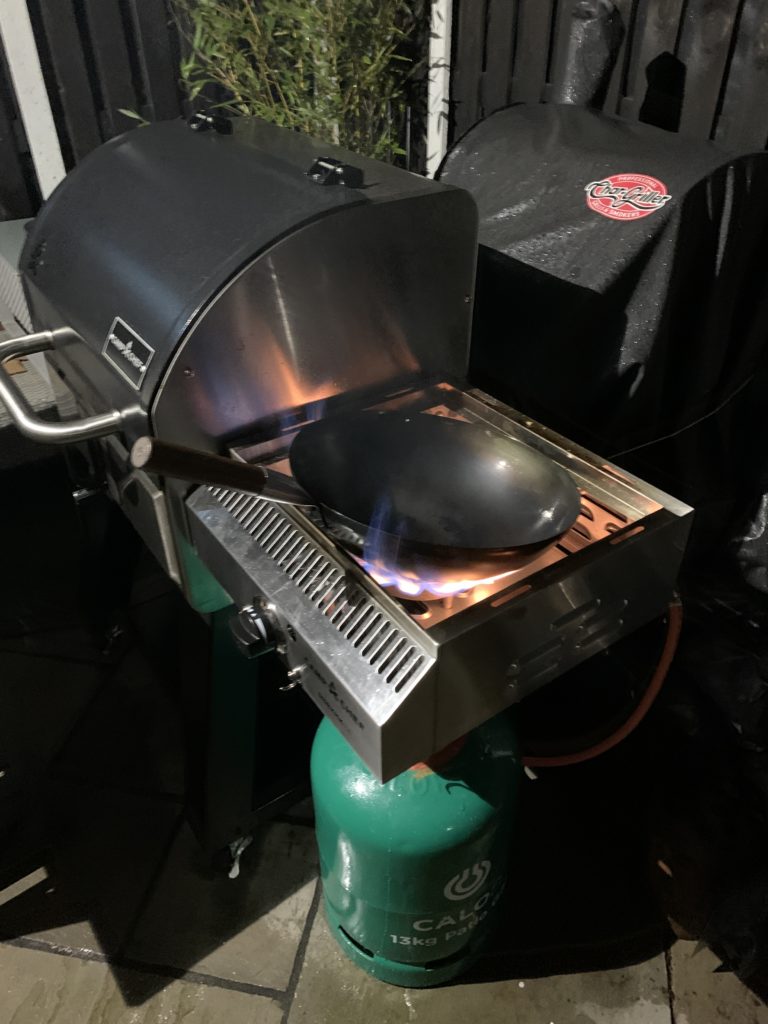
Proper wok cooking needs serious, sustained heat — far more than a standard home hob can produce. That's why the recipes on this site that use a wok specify an outdoor gas burner. It's not snobbery. It's the difference between food that tastes like it came from a good Chinese or Thai restaurant and food that tastes like vegetables that spent too long in a slightly-too-cool pan.
The first time I planned to use my new wok and burner, it rained. I moved everything indoors and used a cheap non-stick wok on the electric hob instead, cranking it as high as it would go. The result was a watery, limp stir fry — the vegetables released their moisture and just sat in it, the noodles were soft all the way through with no texture variation, and there was no smell of char or smoke at any point. It tasted fine. It tasted like boiled vegetables with soy sauce.
The following week I made the exact same recipe on the proper setup — carbon steel wok, full heat from the gas burner outside. It was night and day. The vegetables had visible char on the edges while staying crisp in the centre. The noodles had patches of deep brown, almost blackened char alongside soft sections — texture in every mouthful rather than uniform softness. The whole thing smelled smoky before it even hit the plate, and that smokiness carried through into the flavour. Same ingredients, same recipe, completely different dish. Since then, with practice, it's only got better.
What a wok actually is
A wok is a thin, round-bottomed pan designed to concentrate heat at its base and distribute it up the sloped sides. The shape isn’t decorative — it means a small area at the bottom gets extremely hot, food can be pushed up the sides to cook more gently while something else cooks at the centre, and the whole thing heats and cools almost instantly because the metal is thin.
That thinness is the point. A heavy pan holds heat steadily, which is exactly what you want for searing a steak. A wok needs to respond instantly — full heat one second, food tossed up the side the next, back to full heat immediately after. Thick, heavy woks exist, but they work against the thing that makes wok cooking distinctive.
Why heat is the whole story
Wok hei — literally “wok breath” or “wok energy” — is the smoky, slightly charred flavour that defines good stir-fried food. It comes from food briefly making contact with a wok surface that is significantly hotter than anything a domestic hob can produce, causing rapid charring and a burst of smoke that gets tossed back through the dish.
A domestic gas hob, even on its highest setting, tops out at a fraction of the heat output of a dedicated wok burner. The practical result: food added to a wok on a home hob drops the pan’s temperature immediately, and it takes too long to recover. Instead of charring, the food steams in its own moisture. The dish might still taste fine — but it won’t have that smoky depth, and the texture will be softer and wetter than it should be.
This is why every wok recipe on this site assumes an outdoor gas wok burner. The heat output of these burners — built for exactly this purpose — is what makes the technique work. An indoor hob, even a powerful one, struggles to get close, and the smoke produced at the temperatures needed is not something most kitchens can safely or comfortably handle.
Round-bottomed vs flat-bottomed
A round-bottomed wok is, to put it simply, what makes a wok a wok. The curved base is what allows food to be pushed away from the heat and up the sides — flat-bottomed woks lose much of this. They exist because they sit flat on Western hob rings, but the trade-off is a wok that behaves more like a deep frying pan with sloped sides than a true wok.
On an outdoor gas wok burner, a round-bottomed wok sits directly in the burner’s cradle, exactly as designed. This is the setup to aim for if you’re serious about the technique — it’s also, conveniently, the cheaper and simpler option, since round-bottomed carbon steel woks are some of the least expensive pieces of kit in any kitchen.
Seasoning and maintenance
New carbon steel woks typically come with a factory coating — a thin layer of oil or lacquer applied to prevent rust during shipping and storage. This needs to come off before seasoning begins. Scrub it thoroughly with hot water, a stiff brush, and a little dish soap — this is one of the rare times soap is not just acceptable but necessary, since the goal is to strip everything back to bare metal.
Once the factory coating is gone, season the wok the same way you would cast iron — dry it completely, apply a thin layer of oil, and heat until it polymerises. Carbon steel takes seasoning quickly compared to cast iron because the metal is thinner and heats faster. A few rounds of oiling and heating is usually enough to get a working patina, and it builds further with every use.
Day to day, the maintenance is identical to cast iron — clean while warm, dry immediately, light coat of oil, store dry. A well-seasoned carbon steel wok develops a deep black patina over time and becomes genuinely non-stick.
Mise en place is not optional
Wok cooking moves fast — most stir fries go from first ingredient to plated dish in under five minutes once the heat is on. There is no time to chop anything mid-cook. Every ingredient needs to be prepped, portioned, and within arm’s reach before the burner is lit. See mise en place for the full principle — nowhere does it matter more than here.
The technique in practice
Most good stir fries follow a similar shape: render or sear any meat first and leave its fat in the wok, build aromatics in that fat over high heat, add vegetables in order of how long they take to cook, add noodles or rice if using, then sauce, then any delicate leafy elements right at the end. Each stage uses the heat and the fond from the stage before it.
The technique of tossing food, leaving it briefly against the hot surface, then tossing again — rather than constant stirring — is what builds char without burning everything. Constant motion keeps food away from the heat source entirely. Brief, deliberate contact followed by movement is where the flavour comes from.
Sauces go in around the edge of the wok rather than directly onto the food. The edge is the hottest part of the pan — sauce hitting it vaporises slightly on contact, adding a burst of aromatic steam and char to the dish before it even coats the food.
The honest truth
If you don’t have access to serious outdoor heat, you can still make good food in a wok on a home hob — it just won’t be wok hei in the traditional sense. The dish will taste like a well-made stir fry rather than something with that distinctive smoky char. That’s a perfectly fine thing to cook and eat.
But if you want the real thing — the version that tastes like the best Thai and Chinese restaurants — the heat is non-negotiable. A £15 carbon steel wok and a basic outdoor gas burner will outperform an expensive flat-bottomed wok on the best domestic hob money can buy. The equipment that matters here isn’t the wok. It’s the heat source underneath it.
Key Takeaways
- Wok hei — the smoky, charred flavour of good stir-fried food — comes from heat most domestic hobs cannot produce. An outdoor gas wok burner is what makes the technique work.
- A round-bottomed carbon steel wok is the traditional and most affordable option, and it's designed specifically to work with the heat of a wok burner.
- Mise en place is essential — wok cooking moves too fast to prep anything once the heat is on.
- The technique is short bursts of contact with the hot wok surface followed by tossing, not constant stirring — that's where the char and smoke come from.