Carnitas done properly means two cooks, not one — a long, slow braise in citrus and aromatics to get the meat tender, then a hard blast under the grill to crisp the edges. The contrast is the whole point: shattering, caramelised shards next to juicy, pull-apart chunks. Built for fresh corn tortillas, not the supermarket kind.
Ingredients
- For the pork carnitas
- 2 kg Pork shoulder, boneless, cut into large chunks
- 800 g Pork belly, skin removed, cut into large chunks
- 45 g Fine sea salt
- 2 White onion, large, halved
- 6 cloves Garlic, smashed open, skin on
- 2 Bay leaf
- 2 Orange, large, halved
- 250 ml Water
- For the corn tortillas
- 300 g Masa harina
- 440 ml Water, warm, plus more as needed
- 6 g Fine sea salt
- To serve
- 1 White onion, finely diced, to taste
- 5 g Coriander, leaves, to taste
- 2 Lime, cut into wedges, to taste
- 2 jars Tomatillo salsa, to taste
Equipment
- Large casserole
- Tortilla press
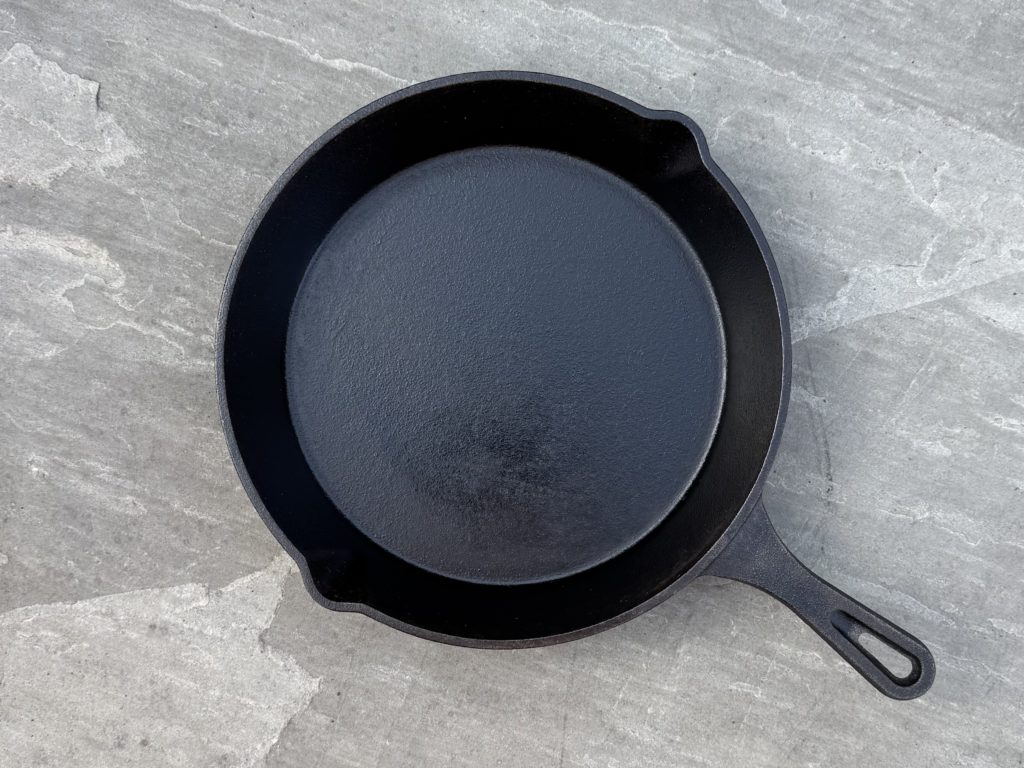
- Cast-iron skillet →
Method
Mix the pork shoulder and pork belly evenly with the salt, working it into all sides. Spread the pork out uncovered on a tray and refrigerate for 12–24 hours.
Preheat the oven to 140°C (284°F) conventional, or 120°C fan. Place the orange halves cut-side down in a large casserole. Add the onion, garlic, and bay leaves. Place the pork on top, pressing down slightly so it sits in an even layer. Pour in the water.
Cover with the lid and cook for 4.5–5.5 hours. Check at the 4-hour mark — the pork should be tender but not yet collapsing, and the fat from the belly should be well rendered. If the pot looks dry before the fat has rendered, add a small splash of water, no more than 50–100ml.
Carefully remove the pork from the casserole, keeping it in large chunks rather than shredding it. Rest for 15–20 minutes.
Preheat the oven grill to 250°C (482°F). Break the rested pork into rough 1-inch chunks — not shredded strands — and spread out on a baking tray. Place the tray on the top shelf, around 6–10 inches below the grill, and crisp for about 10 minutes until browned and crackling on top.
Mix the masa harina and salt together in a large bowl. Add the warm water gradually, mixing as you go, until the dough comes together with the texture of soft Play-Doh — pliable but not sticky. Cover and rest for 20–30 minutes.
Divide the dough into balls, roughly 25–30g each. Press each ball flat using a tortilla press or a heavy pan, with the dough sandwiched between two sheets of baking paper.
Heat a dry cast-iron pan over a medium-high heat. Cook each tortilla for 30–40 seconds on the first side, then flip and cook for about 60 seconds on the second side. Flip back to the first side for a final 20–30 seconds — this final flip is what encourages the tortilla to puff.
Keep the cooked tortillas wrapped in a cloth as you work through the batch.
Pile the crisped pork into the warm tortillas. Top with diced onion, coriander leaves, and a squeeze of lime. Serve with tomatillo salsa alongside.
Notes & Substitutions
Masa harina: Use a proper nixtamalised masa harina — Maseca or an equivalent is the most widely available in the UK. Do not substitute polenta or cornmeal; neither has been through the nixtamalisation process and the texture and flavour will be completely different.
Jalapeños: Roasted jalapeños make a good optional addition alongside the usual toppings, for anyone who wants extra heat.
Make-ahead: The pork can be braised up to 2 days ahead and refrigerated in its cooking liquid — reheat gently before breaking into chunks and crisping under the grill. The tortilla dough is best made fresh, but cooked tortillas can be wrapped and kept warm for up to an hour, or reheated briefly in a dry pan.
Leftovers: Crisped pork keeps in the fridge for up to 3 days. Reheat in a hot, dry pan to re-crisp the edges rather than in the microwave, which will leave it soft throughout.
You might also like
Carnitas Tacos
Carnitas done properly means two cooks, not one — a long, slow braise in citrus and aromatics to get the meat tender, then a hard blast under the grill to crisp the edges. The contrast is the whole point: shattering, caramelised shards next to juicy, pull-apart chunks. Built for fresh corn tortillas, not the supermarket kind.
Ingredients
- 2 kg Pork shoulder (boneless, cut into large chunks)
- 800 g Pork belly (skin removed, cut into large chunks)
- 45 g Fine sea salt
- 2 White onion (large, halved)
- 6 cloves Garlic (smashed open, skin on)
- 2 Bay leaf
- 2 Orange (large, halved)
- 250 ml Water
- 300 g Masa harina
- 440 ml Water (warm, plus more as needed)
- 6 g Fine sea salt
- 1 White onion (finely diced, to taste)
- 5 g Coriander (leaves, to taste)
- 2 Lime (cut into wedges, to taste)
- 2 jars Tomatillo salsa (to taste)
Equipment
- Large casserole
- Tortilla press
- Cast-iron skillet
Method
Dry brine the pork
Mix the pork shoulder and pork belly evenly with the salt, working it into all sides. Spread the pork out uncovered on a tray and refrigerate for 12–24 hours.
For this step: 2 kg Pork shoulder, 800 g Pork belly, 45 g Fine sea salt
Braise the pork
Preheat the oven to 140°C (284°F) conventional, or 120°C fan. Place the orange halves cut-side down in a large casserole. Add the onion, garlic, and bay leaves. Place the pork on top, pressing down slightly so it sits in an even layer. Pour in the water.
Cover with the lid and cook for 4.5–5.5 hours. Check at the 4-hour mark — the pork should be tender but not yet collapsing, and the fat from the belly should be well rendered. If the pot looks dry before the fat has rendered, add a small splash of water, no more than 50–100ml.
For this step: 2 White onion, 6 cloves Garlic, 2 Bay leaf, 2 Orange, 250 ml Water
Rest the pork
Carefully remove the pork from the casserole, keeping it in large chunks rather than shredding it. Rest for 15–20 minutes.
Crisp the pork
Preheat the oven grill to 250°C (482°F). Break the rested pork into rough 1-inch chunks — not shredded strands — and spread out on a baking tray. Place the tray on the top shelf, around 6–10 inches below the grill, and crisp for about 10 minutes until browned and crackling on top.
Make the tortilla dough
Mix the masa harina and salt together in a large bowl. Add the warm water gradually, mixing as you go, until the dough comes together with the texture of soft Play-Doh — pliable but not sticky. Cover and rest for 20–30 minutes.
For this step: 300 g Masa harina, 440 ml Water, 6 g Fine sea salt
Divide and press the tortillas
Divide the dough into balls, roughly 25–30g each. Press each ball flat using a tortilla press or a heavy pan, with the dough sandwiched between two sheets of baking paper.
Cook the tortillas
Heat a dry cast-iron pan over a medium-high heat. Cook each tortilla for 30–40 seconds on the first side, then flip and cook for about 60 seconds on the second side. Flip back to the first side for a final 20–30 seconds — this final flip is what encourages the tortilla to puff.
Keep the cooked tortillas wrapped in a cloth as you work through the batch.
Serve
Pile the crisped pork into the warm tortillas. Top with diced onion, coriander leaves, and a squeeze of lime. Serve with tomatillo salsa alongside.
For this step: 1 White onion, 5 g Coriander, 2 Lime, 2 jars Tomatillo salsa
Notes & Substitutions
Masa harina: Use a proper nixtamalised masa harina — Maseca or an equivalent is the most widely available in the UK. Do not substitute polenta or cornmeal; neither has been through the nixtamalisation process and the texture and flavour will be completely different.
Jalapeños: Roasted jalapeños make a good optional addition alongside the usual toppings, for anyone who wants extra heat.
Make-ahead: The pork can be braised up to 2 days ahead and refrigerated in its cooking liquid — reheat gently before breaking into chunks and crisping under the grill. The tortilla dough is best made fresh, but cooked tortillas can be wrapped and kept warm for up to an hour, or reheated briefly in a dry pan.
Leftovers: Crisped pork keeps in the fridge for up to 3 days. Reheat in a hot, dry pan to re-crisp the edges rather than in the microwave, which will leave it soft throughout.

Free guide: How to Cook Properly
How to Cook Properly — the 11 principles that turn average into outstanding
Equipment worth having
Shape what comes next
Got a recipe you'd love to see, or an idea to make the site better? We read every suggestion.
Log in to suggest