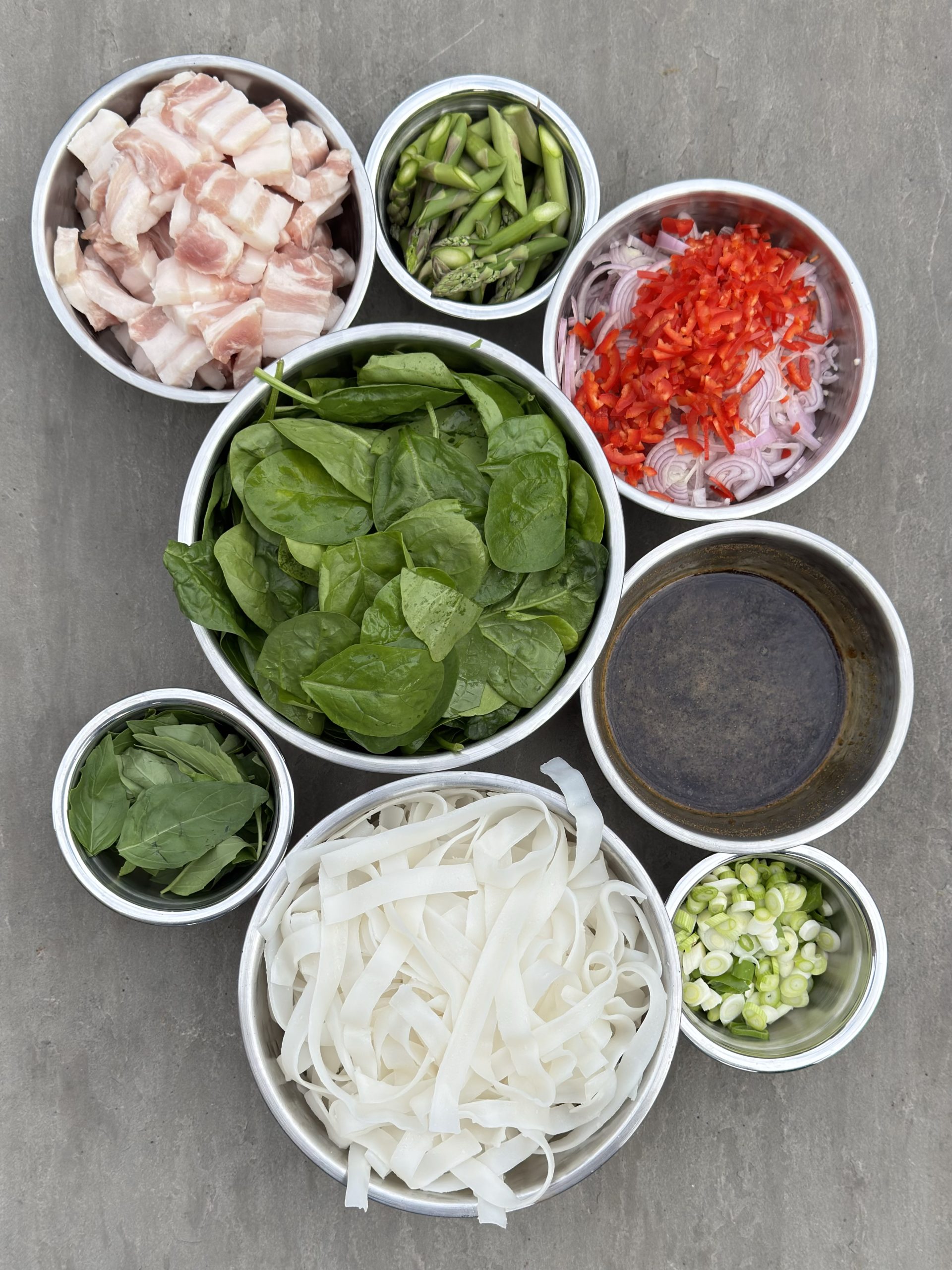
Char siu is the glossy, lacquered pork hanging in the windows of Cantonese barbecue shops — and a home oven gets you closer than you might think. Fermented red bean curd does the heavy lifting in the marinade, bringing savoury depth and the characteristic red edge, while hoisin and honey build the sticky glaze. Slow roast, hot finish, one last coat of honey under the grill.
Prep ahead1 step, start 12-24 hours
Ingredients
- For the pork
- 1.5 kg Pork shoulder, skin removed
- For the marinade
- 2 cubes Fermented red bean curd, see notes for substitution
- 1 tbsp (16g) Fermented red bean curd liquid, from the jar
- 3 tbsp (45g) Light soy sauce
- 2 tbsp (36g) Dark soy sauce
- 3 tbsp (60g) Hoisin sauce
- 2 tbsp (30g) Shaoxing wine
- 2 tbsp (42g) Honey
- 1 tbsp (13g) Dark brown sugar
- 1 tbsp (18g) Oyster sauce
- 1 tsp Five spice powder
- 4 cloves Garlic, finely grated
- 25 g Fresh ginger, finely grated
- 0.5 tsp White pepper
- 1 tsp Red food colouring, optional
- For the finishing glaze
- 2 tbsp (42g) Honey
- 1 tbsp (15g) Water, hot
- 1 tsp (4.5g) Sesame oil
- For the rice
- 400 g Thai jasmine rice
- 520 g Water
- For the pak choi
- 1 tbsp (15g) Light soy sauce
- 1 tbsp (15g) Shaoxing wine
- 1 tsp (4.5g) Sesame oil
- 0.25 tsp White pepper
- 0.5 tbsp (7g) Neutral oil
- 3 cloves Garlic, finely sliced
- 2 Pak choi, quartered lengthways
Equipment
- Wire rack
- Roasting tray
- Digital probe thermometer
- Saucepan with a tight-fitting lid
- Carbon steel wok or large frying pan →
- Pastry brush
Method
Cut the pork shoulder with the grain into long strips, roughly 5–7cm wide and 3–5cm thick.
Mash the fermented red bean curd with its liquid into a smooth paste — this is essential for even distribution through the marinade.
Add the light soy sauce, dark soy sauce, hoisin sauce, Shaoxing wine, honey, dark brown sugar, oyster sauce, five spice powder, garlic, ginger, white pepper, and the red food colouring, if using. Mix until fully combined.
Coat the pork strips thoroughly in the marinade, working it over every surface. Cover and refrigerate for 12–24 hours, turning the pork once if possible.
Remove the pork from the fridge 1 hour before cooking. Preheat the oven to 150°C fan (300°F). Lift the pork out of the marinade and lay the strips on a wire rack set over a roasting tray, keeping the leftover marinade for basting. Roast for 60 minutes.
Increase the oven to 200°C fan (400°F) — and start the rice now, see the next step. Baste the pork with the leftover marinade every 5 minutes and roast for a further 20 minutes, until the edges are dark, sticky, and charring in places, and a probe reads 85–90°C (185–194°F) in the thickest part. See how to cook pork to temperature for a full guide.
Wash the jasmine rice in a bowl of cold water, drain off the cloudy water, and repeat until the water runs barely cloudy. Tip the rice into a saucepan with a tight-fitting lid and add the water, weighing it accurately.
Set the pan over a medium-high heat. As soon as it begins to simmer, turn the heat down to the lowest possible setting, cover, and steam for 12 minutes. Remove the pan from the heat — lid on — and rest for 10–15 minutes. Fluff with a fork just before serving.
Mix the honey, hot water, and sesame oil. Brush heavily over the pork. For a properly lacquered surface, flash the pork under a hot grill for 1–2 minutes — watch it constantly, as the sugars catch fast.
Rest the pork for 15–20 minutes before slicing.
Stir together the light soy sauce, Shaoxing wine, sesame oil, and white pepper in a small bowl.
Heat the neutral oil in a carbon steel wok over a high heat. Add the garlic and cook for about 15 seconds until fragrant. Add the pak choi and stir-fry for a minute, letting it pick up some char. Pour the sauce around the rim of the wok and toss until the sauce has reduced and the pak choi is wilted but still crunchy. See how to cook with a wok for technique guidance.
Slice the pork against the grain into thick strips. Serve over the rice with the pak choi alongside, spooning any resting juices and glaze from the board over the pork.
Notes & Substitutions
Fermented red bean curd: Sold in jars in Chinese supermarkets, usually labelled red fermented bean curd or nam yu — small red cubes in brine. It keeps in the fridge for months and is the backbone of the marinade. If you can’t find it, 13g of miso per cube of bean curd gives a similar fermented depth, though you lose the red colour — the food colouring becomes more worthwhile.
Food colouring: Entirely optional. The bean curd gives a natural reddish edge; the colouring gives the full barbecue-shop crimson. The flavour is identical either way.
Oven temperatures: The temperatures given are for a fan oven. For a conventional oven, add 20°C — so 170°C (340°F) for the slow phase and 220°C (425°F) for the finish.
Leftovers: The pork keeps for 3–4 days in the fridge and is arguably at its best chopped into fried rice or noodles. Slice only what you’re serving and store the rest whole — it stays juicier.
You might also like
Char Siu Pork
Char siu is the glossy, lacquered pork hanging in the windows of Cantonese barbecue shops — and a home oven gets you closer than you might think. Fermented red bean curd does the heavy lifting in the marinade, bringing savoury depth and the characteristic red edge, while hoisin and honey build the sticky glaze. Slow roast, hot finish, one last coat of honey under the grill.
Ingredients
- 1.5 kg Pork shoulder (skin removed)
- 2 cubes Fermented red bean curd (see notes for substitution)
- 1 tbsp Fermented red bean curd liquid (from the jar)
- 3 tbsp Light soy sauce
- 2 tbsp Dark soy sauce
- 3 tbsp Hoisin sauce
- 2 tbsp Shaoxing wine
- 2 tbsp Honey
- 1 tbsp Dark brown sugar
- 1 tbsp Oyster sauce
- 1 tsp Five spice powder
- 4 cloves Garlic (finely grated)
- 25 g Fresh ginger (finely grated)
- 0.5 tsp White pepper
- 1 tsp Red food colouring (optional)
- 2 tbsp Honey
- 1 tbsp Water (hot)
- 1 tsp Sesame oil
- 400 g Thai jasmine rice
- 520 g Water
- 1 tbsp Light soy sauce
- 1 tbsp Shaoxing wine
- 1 tsp Sesame oil
- 0.25 tsp White pepper
- 0.5 tbsp Neutral oil
- 3 cloves Garlic (finely sliced)
- 2 Pak choi (quartered lengthways)
Equipment
- Wire rack
- Roasting tray
- Digital probe thermometer
- Saucepan with a tight-fitting lid
- Carbon steel wok or large frying pan
- Pastry brush
Method
Prepare the pork
Cut the pork shoulder with the grain into long strips, roughly 5–7cm wide and 3–5cm thick.
For this step: 1.5 kg Pork shoulder
Make the marinade
Mash the fermented red bean curd with its liquid into a smooth paste — this is essential for even distribution through the marinade.
Add the light soy sauce, dark soy sauce, hoisin sauce, Shaoxing wine, honey, dark brown sugar, oyster sauce, five spice powder, garlic, ginger, white pepper, and the red food colouring, if using. Mix until fully combined.
For this step: 2 cubes Fermented red bean curd, 1 tbsp Fermented red bean curd liquid, 3 tbsp Light soy sauce, 2 tbsp Dark soy sauce, 3 tbsp Hoisin sauce, 2 tbsp Shaoxing wine, 2 tbsp Honey, 1 tbsp Dark brown sugar, 1 tbsp Oyster sauce, 1 tsp Five spice powder, 4 cloves Garlic, 25 g Fresh ginger, 0.5 tsp White pepper, 1 tsp Red food colouring
Marinate the pork
Coat the pork strips thoroughly in the marinade, working it over every surface. Cover and refrigerate for 12–24 hours, turning the pork once if possible.
Roast low and slow
Remove the pork from the fridge 1 hour before cooking. Preheat the oven to 150°C fan (300°F). Lift the pork out of the marinade and lay the strips on a wire rack set over a roasting tray, keeping the leftover marinade for basting. Roast for 60 minutes.
Raise the heat and baste
Increase the oven to 200°C fan (400°F) — and start the rice now, see the next step. Baste the pork with the leftover marinade every 5 minutes and roast for a further 20 minutes, until the edges are dark, sticky, and charring in places, and a probe reads 85–90°C (185–194°F) in the thickest part. See how to cook pork to temperature for a full guide.
Cook the rice
Wash the jasmine rice in a bowl of cold water, drain off the cloudy water, and repeat until the water runs barely cloudy. Tip the rice into a saucepan with a tight-fitting lid and add the water, weighing it accurately.
Set the pan over a medium-high heat. As soon as it begins to simmer, turn the heat down to the lowest possible setting, cover, and steam for 12 minutes. Remove the pan from the heat — lid on — and rest for 10–15 minutes. Fluff with a fork just before serving.
For this step: 400 g Thai jasmine rice, 520 g Water
Glaze the pork
Mix the honey, hot water, and sesame oil. Brush heavily over the pork. For a properly lacquered surface, flash the pork under a hot grill for 1–2 minutes — watch it constantly, as the sugars catch fast.
For this step: 2 tbsp Honey, 1 tbsp Water, 1 tsp Sesame oil
Rest the pork
Rest the pork for 15–20 minutes before slicing.
Stir-fry the pak choi
Stir together the light soy sauce, Shaoxing wine, sesame oil, and white pepper in a small bowl.
Heat the neutral oil in a carbon steel wok over a high heat. Add the garlic and cook for about 15 seconds until fragrant. Add the pak choi and stir-fry for a minute, letting it pick up some char. Pour the sauce around the rim of the wok and toss until the sauce has reduced and the pak choi is wilted but still crunchy. See how to cook with a wok for technique guidance.
For this step: 1 tbsp Light soy sauce, 1 tbsp Shaoxing wine, 1 tsp Sesame oil, 0.25 tsp White pepper, 0.5 tbsp Neutral oil, 3 cloves Garlic, 2 Pak choi
Slice and serve
Slice the pork against the grain into thick strips. Serve over the rice with the pak choi alongside, spooning any resting juices and glaze from the board over the pork.
Notes & Substitutions
Fermented red bean curd: Sold in jars in Chinese supermarkets, usually labelled red fermented bean curd or nam yu — small red cubes in brine. It keeps in the fridge for months and is the backbone of the marinade. If you can’t find it, 13g of miso per cube of bean curd gives a similar fermented depth, though you lose the red colour — the food colouring becomes more worthwhile.
Food colouring: Entirely optional. The bean curd gives a natural reddish edge; the colouring gives the full barbecue-shop crimson. The flavour is identical either way.
Oven temperatures: The temperatures given are for a fan oven. For a conventional oven, add 20°C — so 170°C (340°F) for the slow phase and 220°C (425°F) for the finish.
Leftovers: The pork keeps for 3–4 days in the fridge and is arguably at its best chopped into fried rice or noodles. Slice only what you’re serving and store the rest whole — it stays juicier.

Free guide: How to Cook Properly
How to Cook Properly — the 11 principles that turn average into outstanding
Equipment worth having





One bowl per ingredient. It sounds simple. It changes everything.
£25-£75
One bowl per ingredient. It sounds simple. It changes everything.
£25-£75
One bowl per ingredient. It sounds simple. It changes everything.
£25-£75
Shape what comes next
Got a recipe you'd love to see, or an idea to make the site better? We read every suggestion.
Log in to suggest