Pad Thai lives or dies on wok heat and timing — everything else is prep. Tamarind, palm sugar, and fish sauce build a sauce that's sharp, sweet, and savoury in equal measure, dried shrimp and preserved radish add a depth most versions skip, and the noodles only get seconds in the sauce before they're done. Get the mise en place right and the cooking itself takes minutes.
Ingredients
- For the noodles
- 180 g Rice stick noodles, 3–5mm width
- For the sauce
- 25 g Tamarind pulp
- 45 g Palm sugar, finely chopped or grated, or light brown sugar
- 35 g Fish sauce
- 15 g Water
- 1 tbsp (15g) Light soy sauce
- For the protein and aromatics
- 180 g Raw prawns, shelled and deveined
- 2 Eggs, whisked
- 4 cloves Garlic, finely chopped
- 30 g Pickled preserved radish, finely chopped
- 15 g Dried shrimp, pounded into crumbs
- 2.5 Garlic chives, stalks, cut into 4cm lengths
- 50 g Bean sprouts
- For the garnish
- 40 g Raw peanuts
- 20 g Bean sprouts, fresh
- 1 Lime, cut into wedges
- 1 Garlic chives, cut into 4cm lengths
- 2 tsp Dried chilli flakes, optional
Equipment
- Carbon steel wok →
- Wok burner
- Fine sieve
- Prep bowls →
Method
Place the dried rice stick noodles in a large bowl and cover completely with hot tap water. Leave to soak for 45 minutes, until flexible but still firm to the bite.
Break the tamarind pulp into small pieces and place in a small bowl. Cover with the measured boiling water and leave to soak for 20 minutes. Mash thoroughly with your fingers or the back of a spoon, then push through a sieve into a clean bowl, discarding the fibres and seeds left behind. You should be left with 40–50g of hydrated paste.
Preheat the oven to 170°C fan. Spread the raw peanuts on a baking tray and roast for 10–15 minutes, until golden — remove them before they look fully done, as they will continue to darken from residual heat once out of the oven. Leave to cool completely.
Transfer the cooled peanuts to a resealable bag and crush into rough pieces using a heavy object such as a rolling pin. Set aside.
Combine the tamarind paste, palm sugar, fish sauce, water, and light soy sauce in a small saucepan. Set over a low heat and stir until the sugar has fully dissolved. Remove from the heat and set aside.
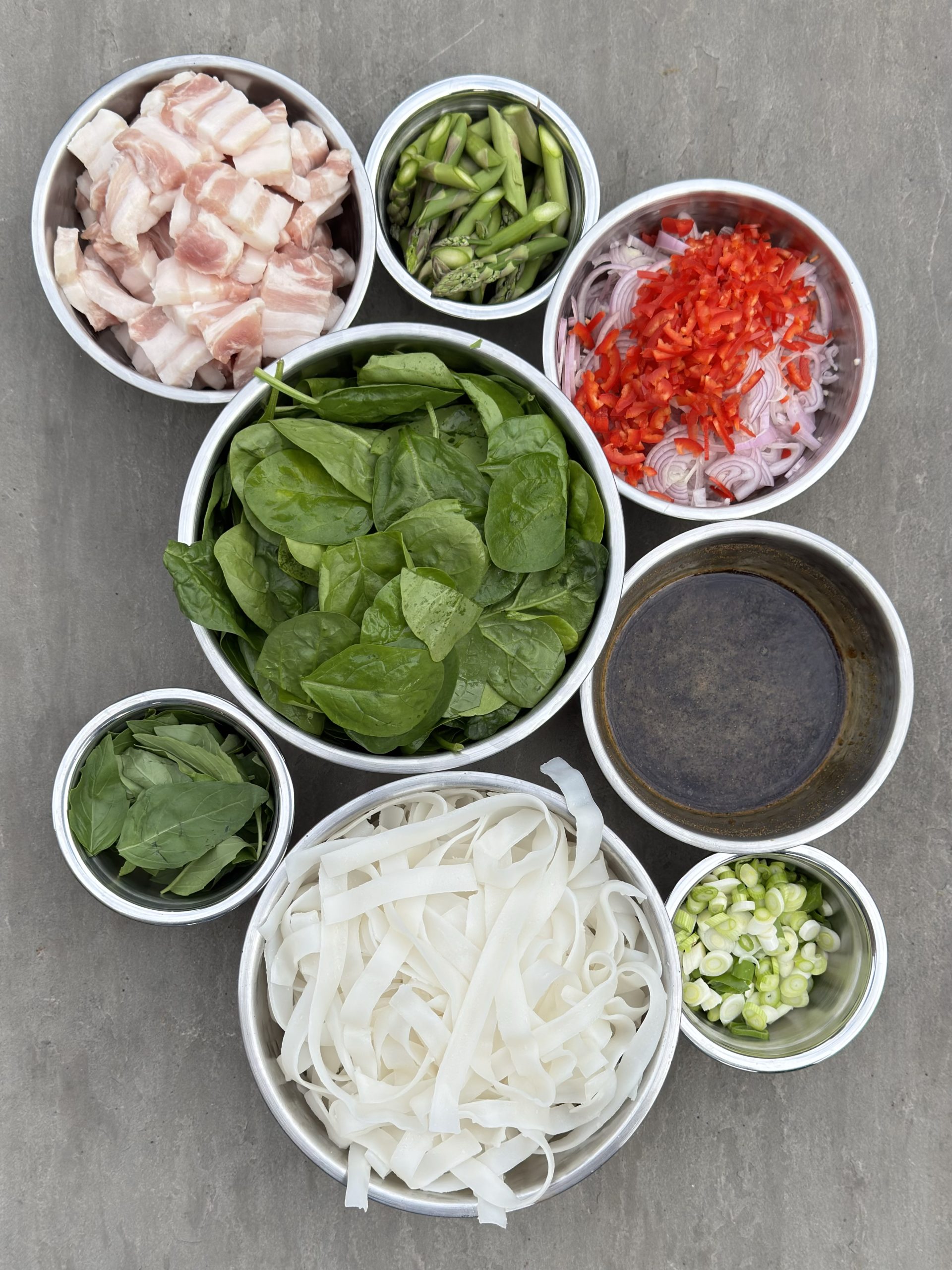
Arrange the drained noodles, prawns, whisked egg, garlic, preserved radish, dried shrimp, garlic chives, and bean sprouts in separate bowls next to the wok, along with the sauce, crushed peanuts, and all garnishes. This dish cooks fast from here and cannot be left unattended once the wok is hot.
Heat a carbon steel wok over the highest heat available — ideally a proper wok burner — until it just starts to smoke. Add a little oil, then add the prawns with a pinch of salt. Stir-fry briefly until about 70% cooked through, then remove from the wok and set aside.
Add a little more oil to the wok, then pour in the whisked egg. Stir constantly, breaking it apart, until scrambled and separated into small pieces. Remove and set aside with the prawns.
Add a final splash of oil to the wok. Add the garlic, dried shrimp, and preserved radish, and stir-fry for 15–20 seconds only, keeping everything moving constantly.
With the wok on its highest heat, add the drained noodles. Toss to coat thoroughly in the oil, then let them sit still for a few seconds at a time to char slightly before tossing again — alternating between brief stillness and tossing for around a minute in total.
Return the prawns and egg to the wok and toss to combine. Pour the sauce around the edges of the wok rather than directly over the noodles, then toss everything together thoroughly.
If the noodles look tight or are sticking, add a splash of water — 1–2 tbsp at a time. If the mixture looks wet, keep stir-frying hard until it reduces. The finished texture should be glossy and slightly sticky, with the noodle strands still separating cleanly from one another.
Add the garlic chives and the cooking portion of bean sprouts in the final 20–30 seconds and toss through. Plate immediately.
Top with the crushed peanuts, extra garlic chives, and fresh bean sprouts. Serve with lime wedges for squeezing over at the table, and a small mound of chilli flakes on the side if using.
Notes & Substitutions
Palm sugar substitution: Light brown sugar works as a direct swap for palm sugar in this recipe — grating or chopping palm sugar is fiddly, and once it’s dissolved into the sauce and cooked through, the difference is effectively undetectable in the finished dish. Use the same weight.
Tamarind pulp: Buy tamarind pulp in a block, not tamarind concentrate or syrup, which are pre-processed and taste noticeably different — sweeter and less complex. The block form needs soaking and sieving but gives a proper sour depth that concentrate can’t match.
Dried shrimp and preserved radish: Both are found in East and Southeast Asian supermarkets, usually in the dried goods or refrigerated pickle section. They keep for months in the fridge once opened, so it’s worth buying more than you need for one batch.
Wok heat: A carbon steel wok on a dedicated wok burner gives the best result, but a regular hob works if it’s the highest-output burner you have. The dish depends on very high heat throughout — a weak flame will steam the ingredients rather than fry them.
You might also like

Pad Thai
Pad Thai lives or dies on wok heat and timing — everything else is prep. Tamarind, palm sugar, and fish sauce build a sauce that's sharp, sweet, and savoury in equal measure, dried shrimp and preserved radish add a depth most versions skip, and the noodles only get seconds in the sauce before they're done. Get the mise en place right and the cooking itself takes minutes.
Ingredients
- 180 g Rice stick noodles (3–5mm width)
- 25 g Tamarind pulp
- 45 g Palm sugar (finely chopped or grated, or light brown sugar)
- 35 g Fish sauce
- 15 g Water
- 1 tbsp Light soy sauce
- 180 g Raw prawns (shelled and deveined)
- 2 Eggs (whisked)
- 4 cloves Garlic (finely chopped)
- 30 g Pickled preserved radish (finely chopped)
- 15 g Dried shrimp (pounded into crumbs)
- 2.5 Garlic chives (stalks, cut into 4cm lengths)
- 50 g Bean sprouts
- 40 g Raw peanuts
- 20 g Bean sprouts (fresh)
- 1 Lime (cut into wedges)
- 1 Garlic chives (cut into 4cm lengths)
- 2 tsp Dried chilli flakes (optional)
Equipment
- Carbon steel wok
- Wok burner
- Fine sieve
- Prep bowls
Method
Soak the noodles
Place the dried rice stick noodles in a large bowl and cover completely with hot tap water. Leave to soak for 45 minutes, until flexible but still firm to the bite.
For this step: 180 g Rice stick noodles
Make the tamarind paste
Break the tamarind pulp into small pieces and place in a small bowl. Cover with the measured boiling water and leave to soak for 20 minutes. Mash thoroughly with your fingers or the back of a spoon, then push through a sieve into a clean bowl, discarding the fibres and seeds left behind. You should be left with 40–50g of hydrated paste.
For this step: 25 g Tamarind pulp
Roast and crush the peanuts
Preheat the oven to 170°C fan. Spread the raw peanuts on a baking tray and roast for 10–15 minutes, until golden — remove them before they look fully done, as they will continue to darken from residual heat once out of the oven. Leave to cool completely.
Transfer the cooled peanuts to a resealable bag and crush into rough pieces using a heavy object such as a rolling pin. Set aside.
For this step: 40 g Raw peanuts
Make the sauce
Combine the tamarind paste, palm sugar, fish sauce, water, and light soy sauce in a small saucepan. Set over a low heat and stir until the sugar has fully dissolved. Remove from the heat and set aside.
For this step: 45 g Palm sugar, 35 g Fish sauce, 15 g Water, 1 tbsp Light soy sauce
Prep everything before you start cooking
Arrange the drained noodles, prawns, whisked egg, garlic, preserved radish, dried shrimp, garlic chives, and bean sprouts in separate bowls next to the wok, along with the sauce, crushed peanuts, and all garnishes. This dish cooks fast from here and cannot be left unattended once the wok is hot.
For this step: 2 Eggs, 4 cloves Garlic, 30 g Pickled preserved radish, 15 g Dried shrimp, 2.5 Garlic chives, 50 g Bean sprouts
Cook the prawns
Heat a carbon steel wok over the highest heat available — ideally a proper wok burner — until it just starts to smoke. Add a little oil, then add the prawns with a pinch of salt. Stir-fry briefly until about 70% cooked through, then remove from the wok and set aside.
For this step: 180 g Raw prawns
Cook the egg
Add a little more oil to the wok, then pour in the whisked egg. Stir constantly, breaking it apart, until scrambled and separated into small pieces. Remove and set aside with the prawns.
Fry the aromatics
Add a final splash of oil to the wok. Add the garlic, dried shrimp, and preserved radish, and stir-fry for 15–20 seconds only, keeping everything moving constantly.
Fry the noodles
With the wok on its highest heat, add the drained noodles. Toss to coat thoroughly in the oil, then let them sit still for a few seconds at a time to char slightly before tossing again — alternating between brief stillness and tossing for around a minute in total.
Combine and finish
Return the prawns and egg to the wok and toss to combine. Pour the sauce around the edges of the wok rather than directly over the noodles, then toss everything together thoroughly.
If the noodles look tight or are sticking, add a splash of water — 1–2 tbsp at a time. If the mixture looks wet, keep stir-frying hard until it reduces. The finished texture should be glossy and slightly sticky, with the noodle strands still separating cleanly from one another.
Add the garlic chives and the cooking portion of bean sprouts in the final 20–30 seconds and toss through. Plate immediately.
Garnish and serve
Top with the crushed peanuts, extra garlic chives, and fresh bean sprouts. Serve with lime wedges for squeezing over at the table, and a small mound of chilli flakes on the side if using.
For this step: 20 g Bean sprouts, 1 Lime, 1 Garlic chives, 2 tsp Dried chilli flakes
Notes & Substitutions
Palm sugar substitution: Light brown sugar works as a direct swap for palm sugar in this recipe — grating or chopping palm sugar is fiddly, and once it’s dissolved into the sauce and cooked through, the difference is effectively undetectable in the finished dish. Use the same weight.
Tamarind pulp: Buy tamarind pulp in a block, not tamarind concentrate or syrup, which are pre-processed and taste noticeably different — sweeter and less complex. The block form needs soaking and sieving but gives a proper sour depth that concentrate can’t match.
Dried shrimp and preserved radish: Both are found in East and Southeast Asian supermarkets, usually in the dried goods or refrigerated pickle section. They keep for months in the fridge once opened, so it’s worth buying more than you need for one batch.
Wok heat: A carbon steel wok on a dedicated wok burner gives the best result, but a regular hob works if it’s the highest-output burner you have. The dish depends on very high heat throughout — a weak flame will steam the ingredients rather than fry them.

Free guide: How to Cook Properly
How to Cook Properly — the 11 principles that turn average into outstanding
Equipment worth having
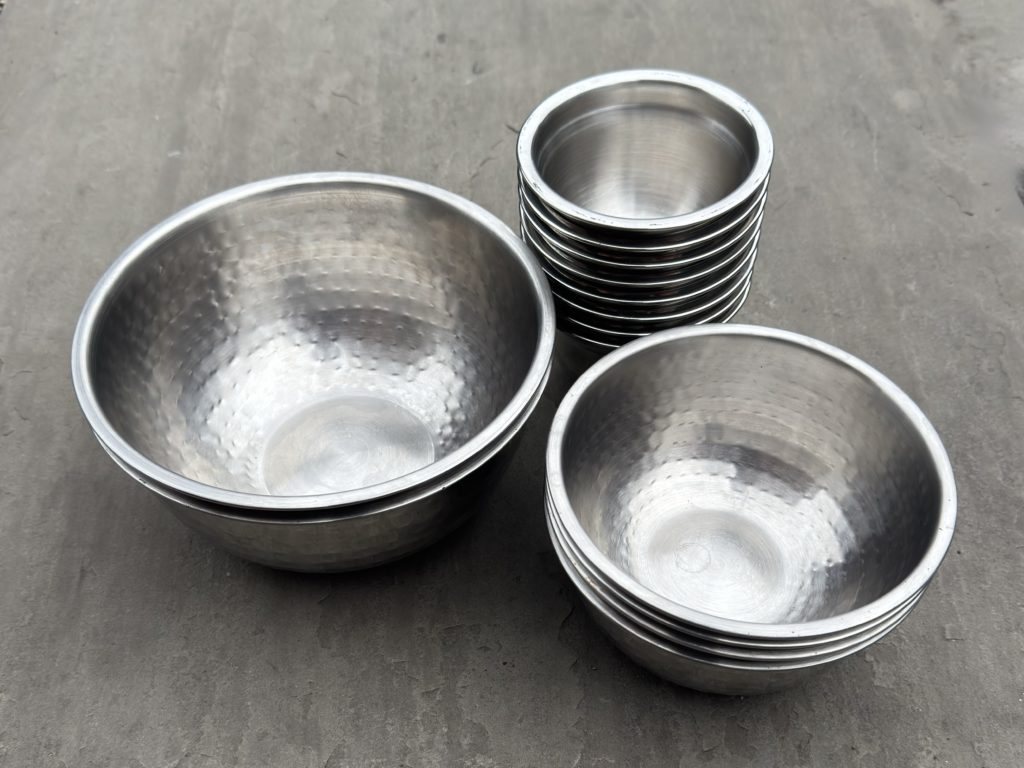
One bowl per ingredient. It sounds simple. It changes everything.
£25-£75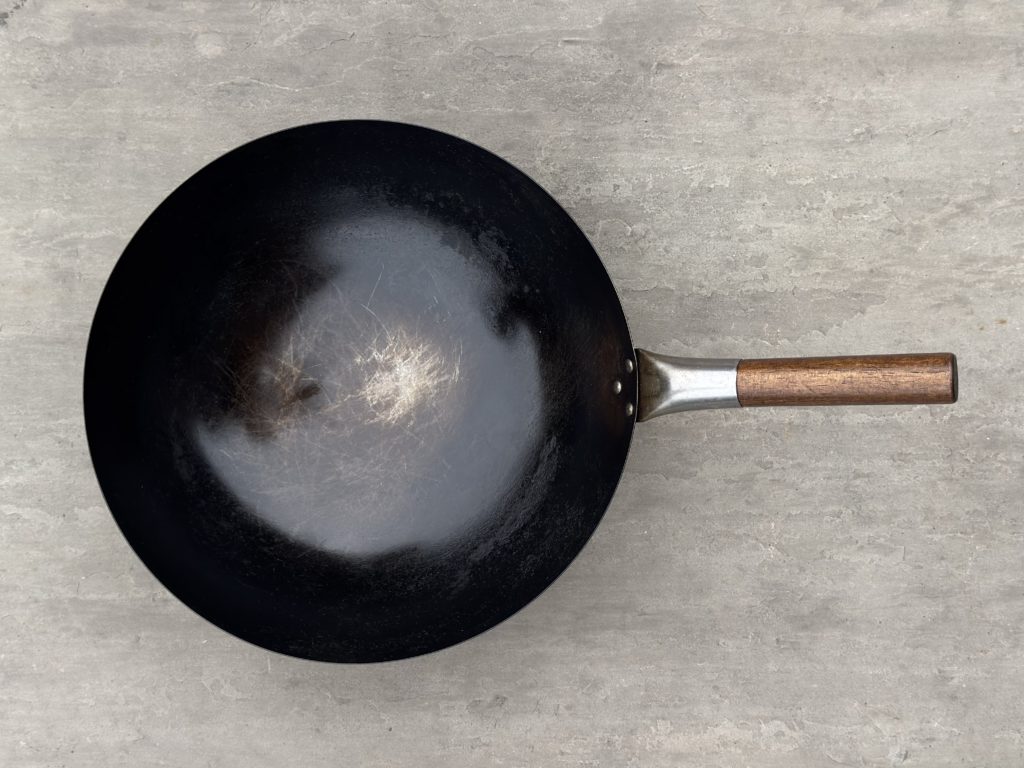
The wok costs £25. The heat underneath it is what you're really paying for.
£10-£25
One bowl per ingredient. It sounds simple. It changes everything.
£25-£75
The wok costs £25. The heat underneath it is what you're really paying for.
£10-£25
One bowl per ingredient. It sounds simple. It changes everything.
£25-£75
The wok costs £25. The heat underneath it is what you're really paying for.
£10-£25
Shape what comes next
Got a recipe you'd love to see, or an idea to make the site better? We read every suggestion.
Log in to suggest