A one-pan dinner that leans on technique rather than a long ingredient list. The thighs are dry-brined overnight for skin that properly crisps, then butter-basted with thyme, rosemary, and garlic while a white wine and tarragon cream sauce comes together in the same pan. The vegetables get two minutes at the end — long enough to turn tender, not long enough to lose their colour.
Ingredients
- For the chicken
- 4 Chicken thighs, skin on bone in
- Fine sea salt, to season generously
- Black pepper, freshly ground
- 0.5 tbsp (7g) Neutral oil, for searing
- 50 g Butter
- 2 sprigs Fresh thyme
- 2 sprigs Fresh rosemary
- 3 cloves Garlic, smashed open, skin on
- For the sauce
- 1 Shallots, finely diced
- 2 cloves Garlic, finely chopped
- 200 ml Dry white wine, see notes
- 200 ml Chicken stock
- 75 g Double cream
- 1 tsp (5g) Dijon mustard
- 1 tsp Fresh tarragon, coarsely chopped
- 1 tbsp (4g) Flat-leaf parsley, coarsely chopped
- Fine sea salt, to taste
- Black pepper, freshly ground, to taste
- 10 g Fresh lemon juice
- For the vegetables
- 300 g Courgette, quartered lengthways, core removed, cut into 1.5cm chunks
- 100 g Asparagus tips, cut into 3cm lengths
- 100 g Petit pois
Equipment
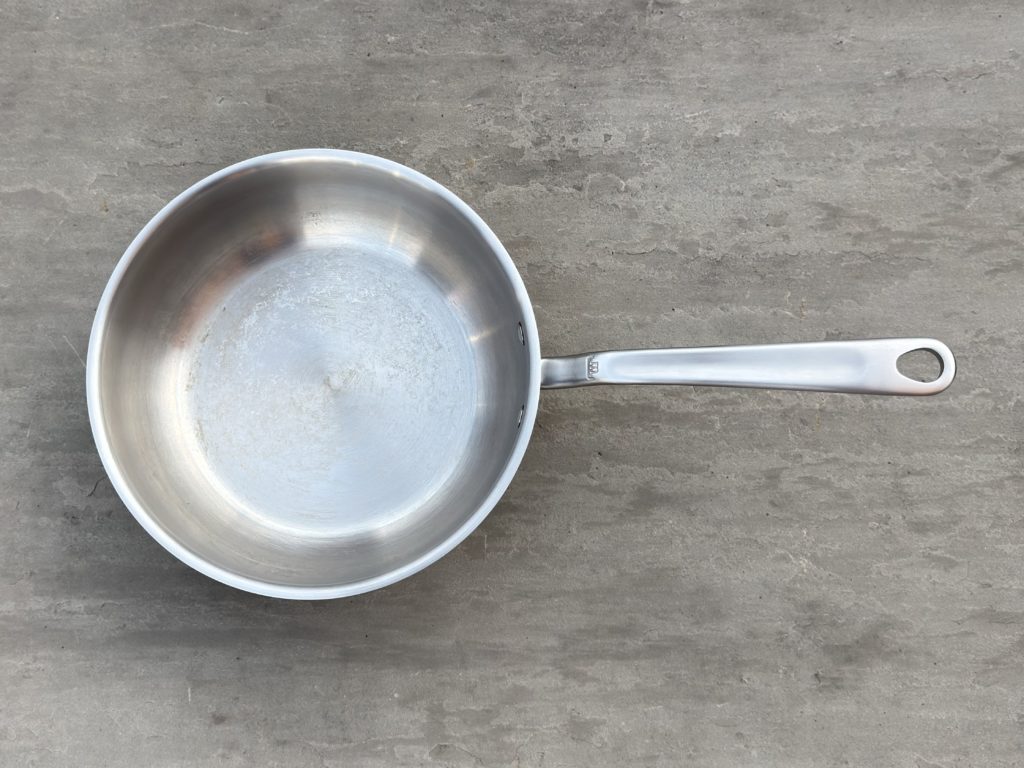
- Large stainless steel frying pan
- Digital probe thermometer
Method
Season the chicken thighs generously all over with fine sea salt and black pepper. Place on a tray and refrigerate, uncovered, overnight. Remove from the fridge 30 minutes before cooking.
Heat the neutral oil in a large stainless steel frying pan over a medium-high heat until shimmering. Place the thighs in skin-side down and leave completely untouched until the skin is deeply golden, crisp, and releases from the pan without resistance — about 8–10 minutes. Flip and brown the other side.
Add the butter, thyme, rosemary, and garlic to the pan and let the butter foam. Flip the chicken in the foaming butter every minute or so until deeply browned and crisp all over, and a probe reads at least 74°C (165°F) at the thickest part, away from the bone — see how to cook chicken to temperature. Remove the thighs to a tray, pour the browned butter, herbs, and garlic over the top, and leave to rest while you make the sauce.
Return the pan to a medium heat — a slick of the leftover fat is all you need, so pour off any excess. Add the shallots and cook for 30–60 seconds until translucent. Add the garlic, stir, and cook for a further 30 seconds until fragrant.
Pour in the white wine, scraping up the fond from the base of the pan, and reduce by half. Add the chicken stock and bring to a simmer.
Add the double cream and Dijon mustard and bring to the boil. Let the sauce reduce slightly until it lightly coats the back of a spoon but still pours freely — it is not meant to be thick.
Add the courgette, asparagus tips, and petit pois all at once and cook for about 2 minutes, until just tender and still vibrant.
Stir through the tarragon and parsley, then taste and season with fine sea salt and black pepper. Finish with the lemon juice.
Spoon the sauce and vegetables into warmed bowls and place the chicken on top, skin-side up so the skin stays crisp.
Notes & Substitutions
Wine: Use a dry, unoaked white — Sauvignon Blanc, Picpoul, or an unoaked Chardonnay all work. Avoid anything heavily oaked or off-dry; the oak fights the tarragon and residual sugar makes the reduced sauce taste sweet. The rest of the bottle belongs alongside dinner.
Tarragon: The anise note of fresh tarragon is what makes this sauce read as French rather than generic creamy chicken — it earns its place. Don’t substitute dried, which tastes of hay. If you can’t find it, chervil is the closest match, or double the parsley for a different but still good sauce.
Vegetables: Treat the trio as a template for what’s in season — podded broad beans, sliced runner beans, or Tenderstem broccoli cut into short lengths all work with the same two-minute treatment. Keep the total around 500g so the sauce isn’t overwhelmed.
What to serve it with: The sauce is the point, so serve something to carry it — crusty bread, buttered new potatoes, or plain rice. Nothing that competes.
Make-ahead: The overnight salting is the make-ahead step — everything else is best cooked and served straight away. The sauce loses its freshness on reheating and the skin softens sitting in it.
You might also like

Chicken in White Wine Cream Sauce
A one-pan dinner that leans on technique rather than a long ingredient list. The thighs are dry-brined overnight for skin that properly crisps, then butter-basted with thyme, rosemary, and garlic while a white wine and tarragon cream sauce comes together in the same pan. The vegetables get two minutes at the end — long enough to turn tender, not long enough to lose their colour.
Ingredients
- 4 Chicken thighs, skin on bone in
- Fine sea salt (to season generously)
- Black pepper (freshly ground)
- 0.5 tbsp Neutral oil (for searing)
- 50 g Butter
- 2 sprigs Fresh thyme
- 2 sprigs Fresh rosemary
- 3 cloves Garlic (smashed open, skin on)
- 1 Shallots (finely diced)
- 2 cloves Garlic (finely chopped)
- 200 ml Dry white wine (see notes)
- 200 ml Chicken stock
- 75 g Double cream
- 1 tsp Dijon mustard
- 1 tsp Fresh tarragon (coarsely chopped)
- 1 tbsp Flat-leaf parsley (coarsely chopped)
- Fine sea salt (to taste)
- Black pepper (freshly ground, to taste)
- 10 g Fresh lemon juice
- 300 g Courgette (quartered lengthways, core removed, cut into 1.5cm chunks)
- 100 g Asparagus tips (cut into 3cm lengths)
- 100 g Petit pois
Equipment
- Large stainless steel frying pan
- Digital probe thermometer
Method
Salt the chicken overnight
Season the chicken thighs generously all over with fine sea salt and black pepper. Place on a tray and refrigerate, uncovered, overnight. Remove from the fridge 30 minutes before cooking.
For this step: 4 Chicken thighs, skin on bone in, Fine sea salt, Black pepper
Sear the chicken
Heat the neutral oil in a large stainless steel frying pan over a medium-high heat until shimmering. Place the thighs in skin-side down and leave completely untouched until the skin is deeply golden, crisp, and releases from the pan without resistance — about 8–10 minutes. Flip and brown the other side.
For this step: 0.5 tbsp Neutral oil
Butter-baste and rest
Add the butter, thyme, rosemary, and garlic to the pan and let the butter foam. Flip the chicken in the foaming butter every minute or so until deeply browned and crisp all over, and a probe reads at least 74°C (165°F) at the thickest part, away from the bone — see how to cook chicken to temperature. Remove the thighs to a tray, pour the browned butter, herbs, and garlic over the top, and leave to rest while you make the sauce.
For this step: 50 g Butter, 2 sprigs Fresh thyme, 2 sprigs Fresh rosemary, 3 cloves Garlic
Start the sauce
Return the pan to a medium heat — a slick of the leftover fat is all you need, so pour off any excess. Add the shallots and cook for 30–60 seconds until translucent. Add the garlic, stir, and cook for a further 30 seconds until fragrant.
For this step: 1 Shallots, 2 cloves Garlic
Deglaze and reduce
Pour in the white wine, scraping up the fond from the base of the pan, and reduce by half. Add the chicken stock and bring to a simmer.
For this step: 200 ml Dry white wine, 200 ml Chicken stock
Add the cream and mustard
Add the double cream and Dijon mustard and bring to the boil. Let the sauce reduce slightly until it lightly coats the back of a spoon but still pours freely — it is not meant to be thick.
For this step: 75 g Double cream, 1 tsp Dijon mustard
Cook the vegetables
Add the courgette, asparagus tips, and petit pois all at once and cook for about 2 minutes, until just tender and still vibrant.
For this step: 300 g Courgette, 100 g Asparagus tips, 100 g Petit pois
Finish the sauce
Stir through the tarragon and parsley, then taste and season with fine sea salt and black pepper. Finish with the lemon juice.
For this step: 1 tsp Fresh tarragon, 1 tbsp Flat-leaf parsley, Fine sea salt, Black pepper, 10 g Fresh lemon juice
Serve
Spoon the sauce and vegetables into warmed bowls and place the chicken on top, skin-side up so the skin stays crisp.
Notes & Substitutions
Wine: Use a dry, unoaked white — Sauvignon Blanc, Picpoul, or an unoaked Chardonnay all work. Avoid anything heavily oaked or off-dry; the oak fights the tarragon and residual sugar makes the reduced sauce taste sweet. The rest of the bottle belongs alongside dinner.
Tarragon: The anise note of fresh tarragon is what makes this sauce read as French rather than generic creamy chicken — it earns its place. Don’t substitute dried, which tastes of hay. If you can’t find it, chervil is the closest match, or double the parsley for a different but still good sauce.
Vegetables: Treat the trio as a template for what’s in season — podded broad beans, sliced runner beans, or Tenderstem broccoli cut into short lengths all work with the same two-minute treatment. Keep the total around 500g so the sauce isn’t overwhelmed.
What to serve it with: The sauce is the point, so serve something to carry it — crusty bread, buttered new potatoes, or plain rice. Nothing that competes.
Make-ahead: The overnight salting is the make-ahead step — everything else is best cooked and served straight away. The sauce loses its freshness on reheating and the skin softens sitting in it.

Free guide: How to Cook Properly
How to Cook Properly — the 11 principles that turn average into outstanding
Equipment worth having
Shape what comes next
Got a recipe you'd love to see, or an idea to make the site better? We read every suggestion.
Log in to suggest